How to teach ukulele strumming can be challenging, especially for young beginners.
Many students are expected to learn chords, strumming patterns, and singing at the same time. As a result, they often feel overwhelmed.
Over the years, I discovered that students learn strumming much better when rhythm is taught separately first.
Therefore, before adding strumming patterns to songs, I focus on helping students understand rhythm through movement, listening, composition, and games.
This approach builds confidence and makes the transition to the instrument much easier.
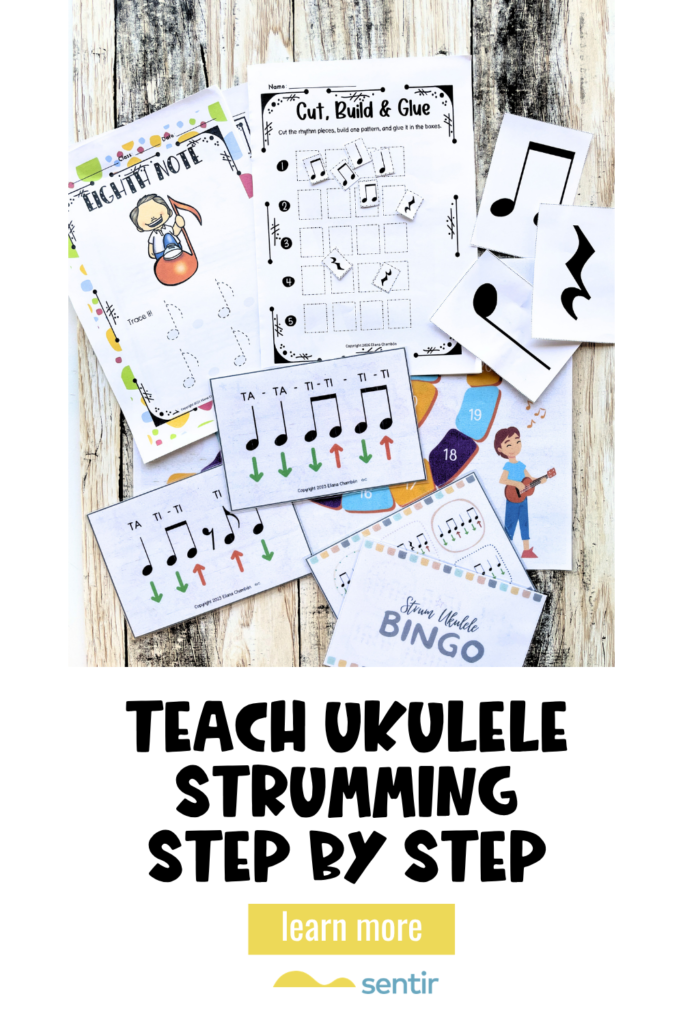
Explore my complete ukulele strumming activities bundle for ready-to-use resources. (Link in English – Link in Spanish)
 “Save this idea for laterÂ
How to Teach Ukulele Strumming Through Rhythm
First, before students ever strum on the ukulele, I spend time helping them develop rhythm away from the instrument.
This usually includes:
- rhythm chants
- movement activities
- scarves
- bean bags
- egg shakers
- body percussion
- echo patterns
I use rhythmic chants inspired by the approach of Edwin Gordon to help students feel pulse and meter internally.
Because of this, students begin understanding rhythm physically before applying it to the instrument.
First they move.
Then they speak the rhythm.
After that, they transfer those patterns to the ukulele.
This creates a much stronger rhythmic foundation.
Easy Ways to Teach Ukulele Strumming Patterns
Next, before introducing actual strumming patterns, I teach only a few basic rhythm symbols.
I start with:
- quarter note
- paired eighth notes
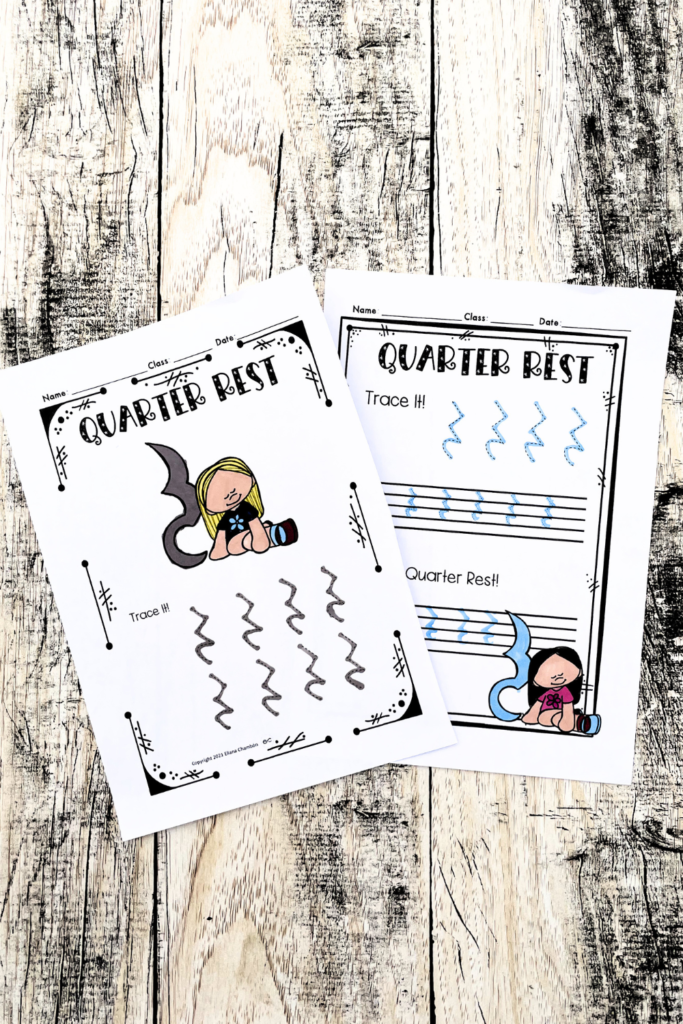
- quarter rest
These three symbols are enough to create many beginner strumming patterns in 4/4.
First, I show each symbol visually.
Then I explain how each one sounds.
After that, we complete simple activities such as:
- tracing
- drawing
- naming
- identifying
As a result, students become familiar with the symbols before using them in strumming.
Prefer to try just this activity first? Get this game individually here (Link in English – Link in Spanish)
Build Rhythms with Manipulatives
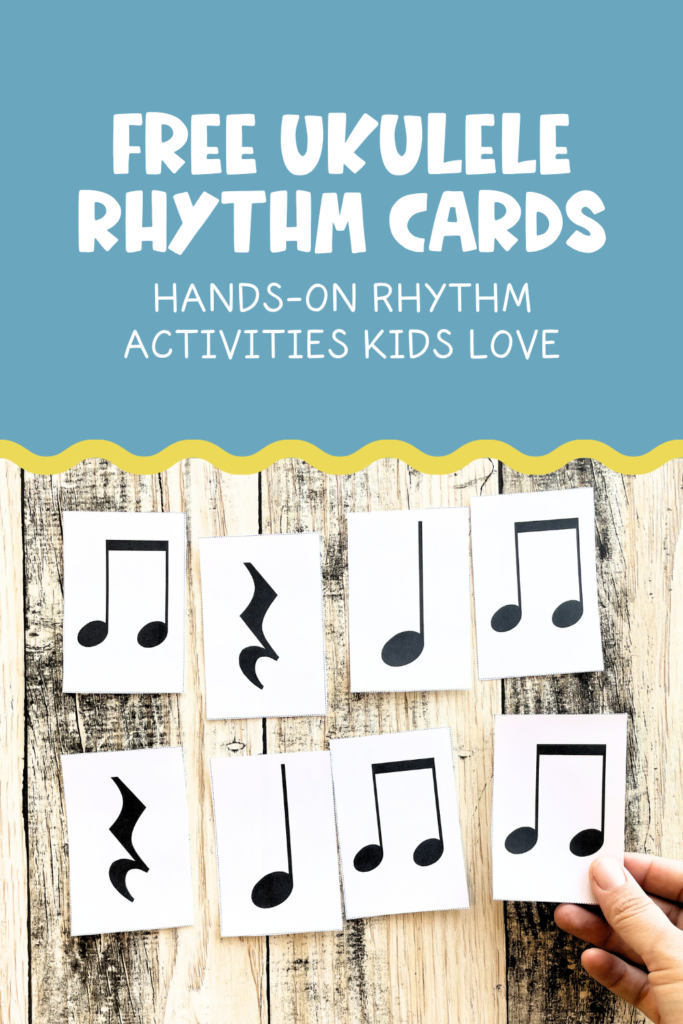
Once students know the symbols, I use printable rhythm cards.
Free Ukulele Rhythm Cards (Link in English – Link in Spanish)
These free cards are one of the most useful tools in my lessons.
Students can:
- arrange symbols
- create patterns
- read them
- modify them
- invent new combinations
First, we perform the patterns using egg shakers.
Then students repeat them using body percussion.
After that, they begin transferring them to the ukulele.
This is when they really start understanding how rhythm works.
For example, many students create very long patterns using all the cards available and then read them together.
Because of this playful exploration, students learn naturally without feeling pressured.
 “Save this idea for laterÂ
👉 Get the free ukulele rhythm cards here: (Link in English – Link in Spanish)
From Classroom Practice to Printable Worksheets
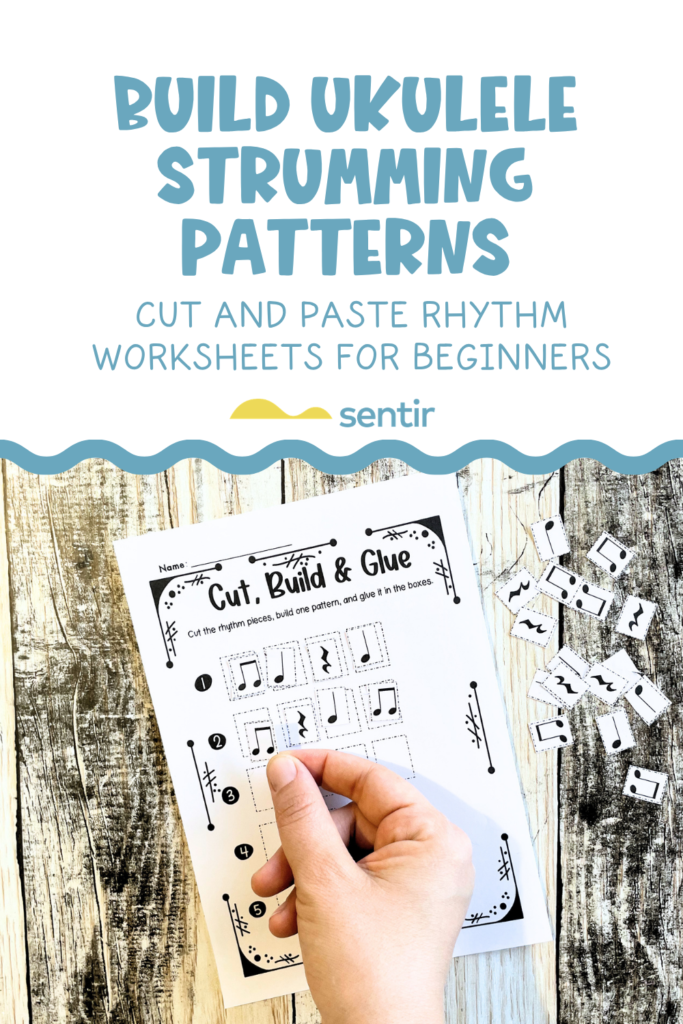
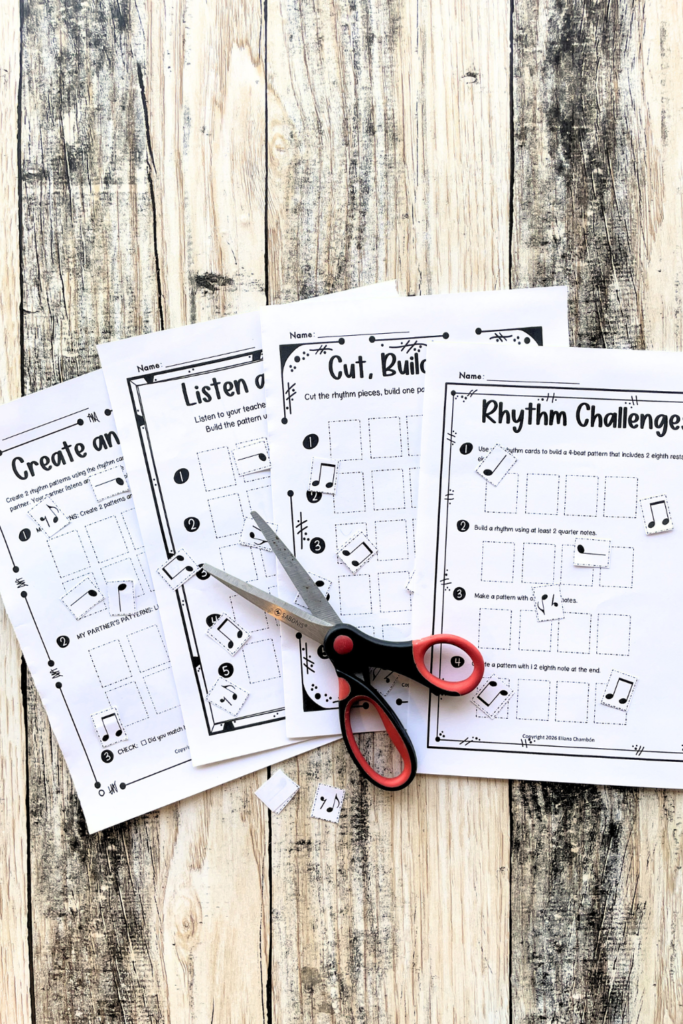
Because students enjoyed this activity so much, I created a printable extension.
Ukulele Strumming Rhythm Activity Level 1 (Link in English – Link in Spanish)
This resource allows students to:
- cut rhythm pieces
- build patterns
- glue them
- complete listening tasks
- trace symbols
- work in pairs
In addition, it allows students to keep their compositions in their notebooks.
This gives them a record of their progress over time.
These resources are included in my ukulele strumming bundle. (Link in English – Link in Spanish)
 “Save this idea for laterÂ
👉 Explore the cut and paste strumming worksheets here: (Link in English – Link in Spanish)
How to Teach Ukulele Strumming to Kids
I usually dedicate 10–20 minutes of each lesson to rhythm and strumming.
Then the rest of the lesson focuses on:
- chords
- songs
- accompaniment
Within that rhythm block, I follow a sequence that helps students internalize patterns gradually.
Step 1: Movement and Audiation
First, the first 5 minutes of most lessons are spent singing or chanting without instruments.
We use:
- scarves
- bean bags
- parachutes
- movement
- gestures
Because of this, students internalize rhythmic and melodic patterns through movement.
Over time, they build a mental “library” of patterns.
Therefore, later they can recognize those same patterns when reading or playing.
Step 2: Composition and Exploration
Next, students create their own rhythms.
Using cards, they can:
- arrange
- combine
- change
- invent
Usually, they create several short patterns.
First they perform them with egg shakers.
Then they transfer them to ukulele.
As a result, students are not simply copying rhythms — they are creating music.
This makes learning much more meaningful.
Prefer to try just this activity first? Get this game individually here (Link in English – Link in Spanish)
Step 3: Listening Activities
After that, once students know several patterns, I introduce listening activities.
I clap, speak, or strum a pattern and students must:
- identify it
- rebuild it
- write it
- perform it
This strengthens audiation.
In addition, it develops independence and confidence.
Over time, students begin recognizing patterns quickly by ear.
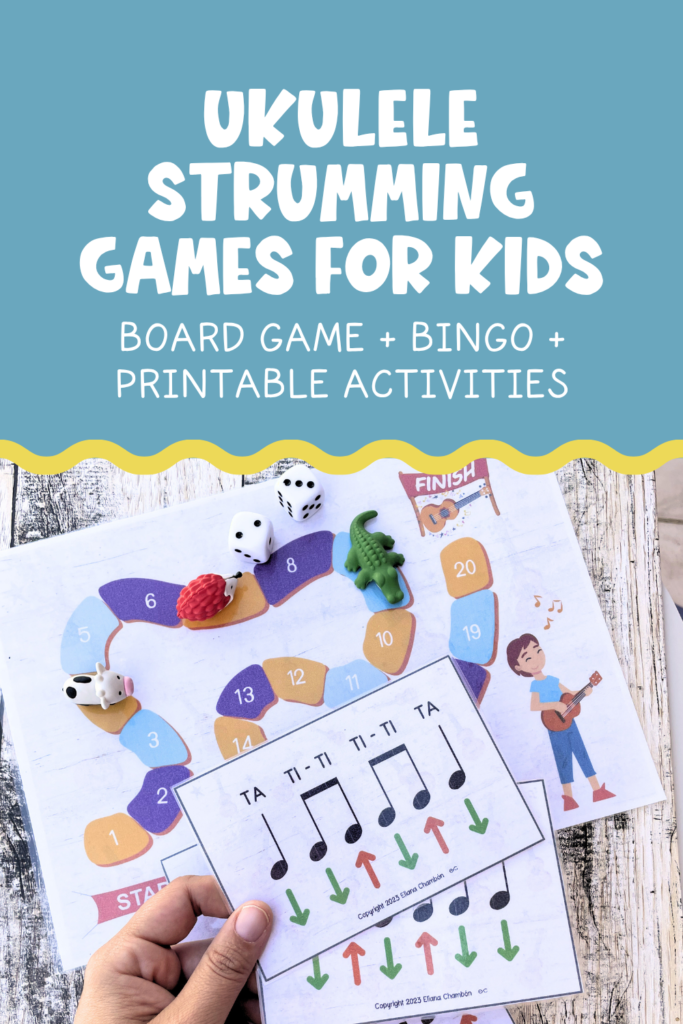
Step 4: Reinforcement Through Games
Finally, when the patterns feel familiar, I use games.
My favorites are:
- Ukulele Strumming Board Game
- Ukulele Strumming Bingo
- partner challenges
- listening games
Because of this, students get the repetition they need without boredom.
Many students do not even realize how much they are practicing because they are focused on playing.
Explore the complete strumming bundle. (Link in English – Link in Spanish)
 “Save this idea for laterÂ
Prefer to try just this activity first? Get this game individually here (Link in English – Link in Spanish)
Practice Strumming Separately from Songs
One of the most important changes in my teaching was separating strumming practice from songs.
First, students learn chords.
Then they play songs using only down strums.
This allows them to focus on:
- chord changes
- hand position
- pulse
without the extra challenge of complex strumming.
After that, once they feel comfortable, I introduce strumming patterns.
As a result, students feel much less frustrated.
Add Strumming to Songs Later
Once students can:
âś” change chords comfortably
âś” recognize patterns
âś” perform strumming independently
then we begin adding strumming to songs.
At this stage, many students can play the pattern but cannot sing at the same time.
That is completely normal.
Therefore, I usually tell students not to sing yet.
Instead:
- think the melody internally
- focus on rhythm
- count strums per chord
After that, once strumming becomes automatic, singing becomes much easier.
Final Thoughts
Teaching ukulele strumming takes time.
For children ages 6–10, this process may take months or even years depending on:
- age
- practice habits
- coordination
- previous experience
Because of this, it is important to respect each student’s pace.
When rhythm is introduced gradually, students become more confident and independent.
As a result, they enjoy playing much more.
Related Ukulele Teaching Ideas
If you’d like more ideas for your ukulele lessons, you may also enjoy these posts:
- Ukulele Chord Teaching Resources – 5 Fun Activities and Games
- Ukulele Games for Beginners – How to Teach Chords and Strumming Through Play
These posts include more classroom ideas, games, and printable activities for beginner ukulele students.
Ready-to-Use Strumming Resources
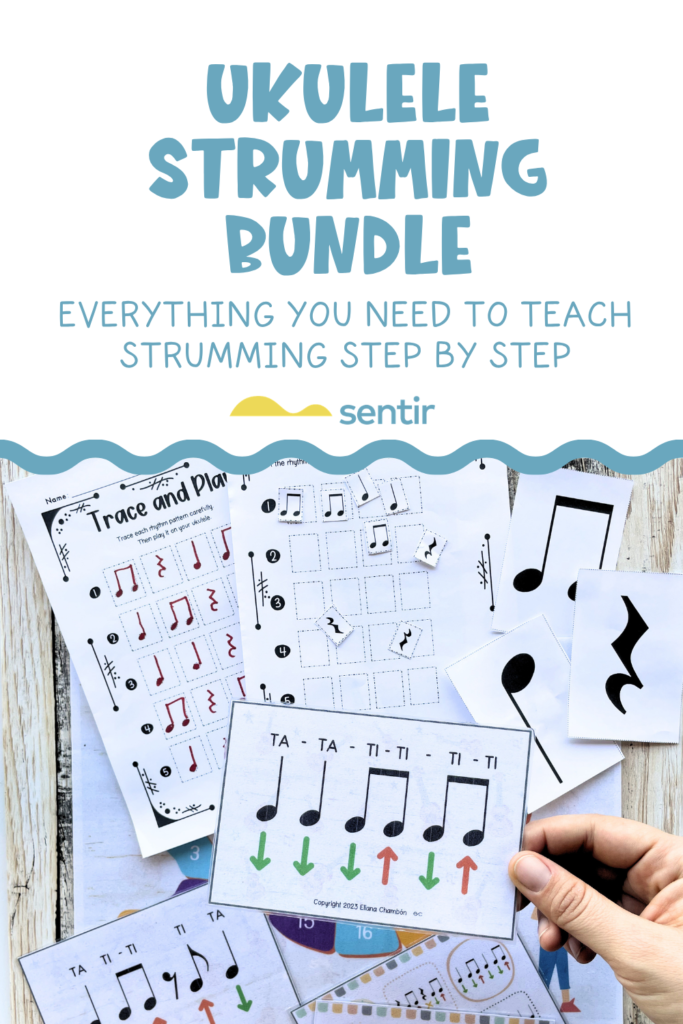
If you’d like ready-made activities to teach strumming this way, I created a complete collection of printable games, worksheets, and interactive activities.
Explore the complete ukulele strumming activities bundle. (Link in English – Link in Spanish)