

If you’ve ever wondered how to teach percussion instruments in elementary music in a way that feels engaging, meaningful, and memorable for students, this visual and game-based approach can completely transform your classroom.
And honestly?
It started with a game.
The First Music Game That Changed My Life
I grew up in a rural area of Uruguay.
For many years, music class wasn’t really a thing at school. If we had music, it was mostly choir. We sang… and that was it.
Then one day, something unexpected happened.
My mom — who isn’t a music teacher but has always loved music — was asked to teach music classes at the school.
She started searching for ideas and found a magazine called Canciones para el Jardín, a special edition from EDIBA that included CDs, printable materials… and something I had never seen before:
A music bingo game.
A sound bingo.
That was the first time I experienced music as play.
Not just singing.
Not just repeating.
But listening, identifying, observing, interacting.
And something clicked.
Years later, when I decided to study music education, I realized I had always been drawn to games, manipulatives, and visual learning materials.
I started designing my own classroom resources:
- memory games,
- bingo boards,
- printable activities,
- and hands-on music centers.
Then around 2016, I discovered Teachers Pay Teachers and saw teachers creating resources just like the ones I dreamed about making.
And today?
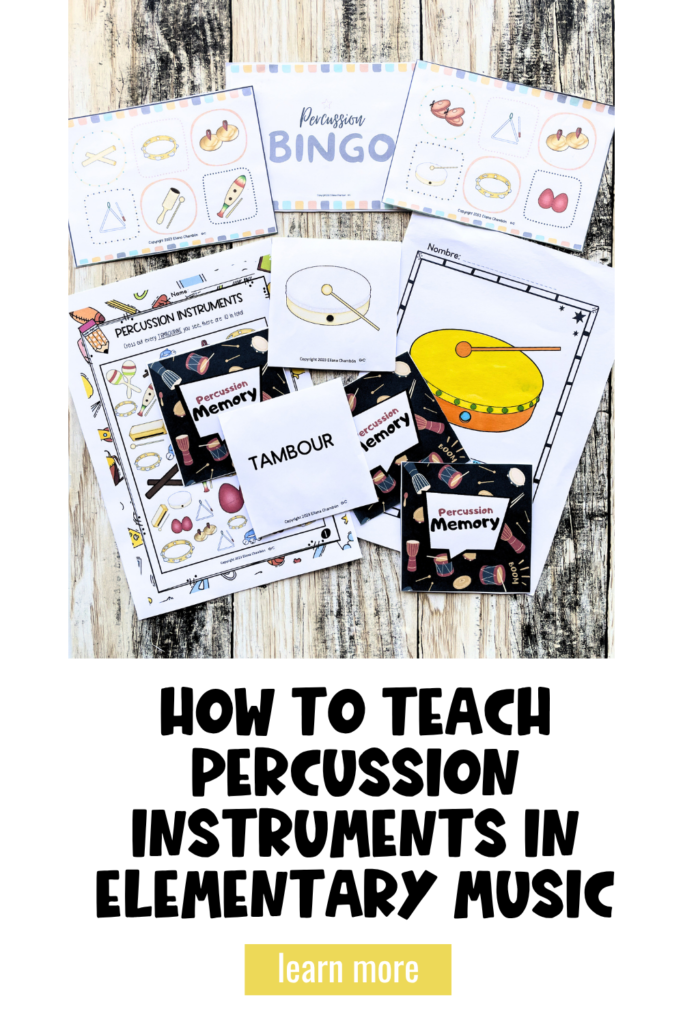
The Percussion Bingo activity I created is basically my tribute to that childhood “sonobingo.”
Looking for ready-to-use percussion activities for elementary music?
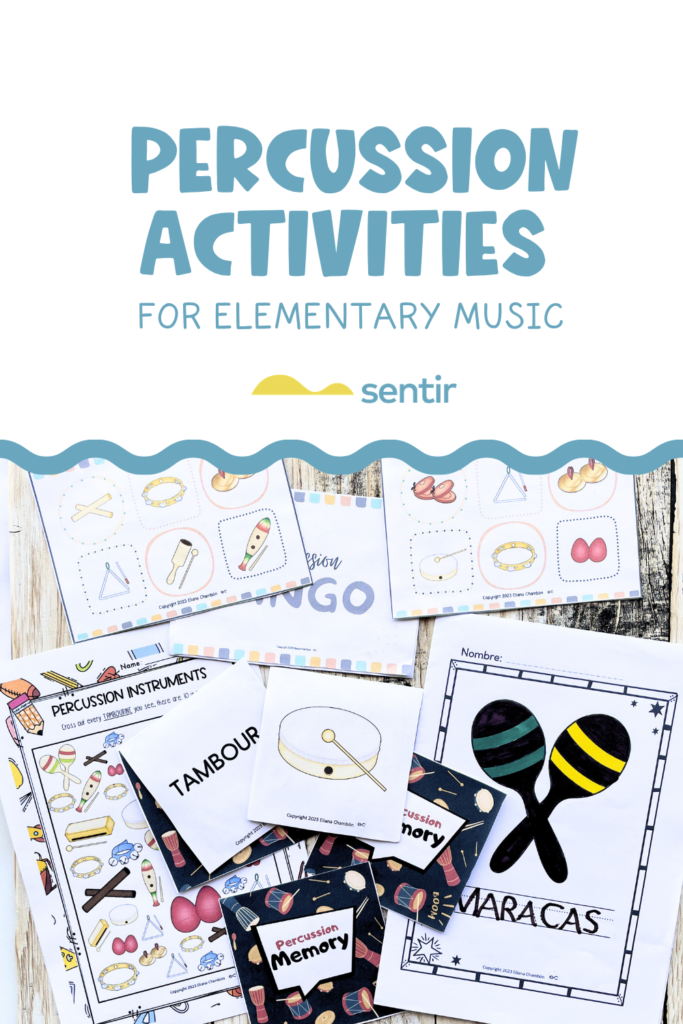
These printable percussion worksheets, bingo games, coloring pages, and music centers help students recognize, classify, and listen to percussion instruments through active learning.
🇺🇸 Explore the Percussion Games & Worksheets Bundle
🇪🇸 Explora el Paquete de Juegos y Actividades de Percusión
 “Save this idea for later
Why We Teach Percussion Instruments in Elementary Music
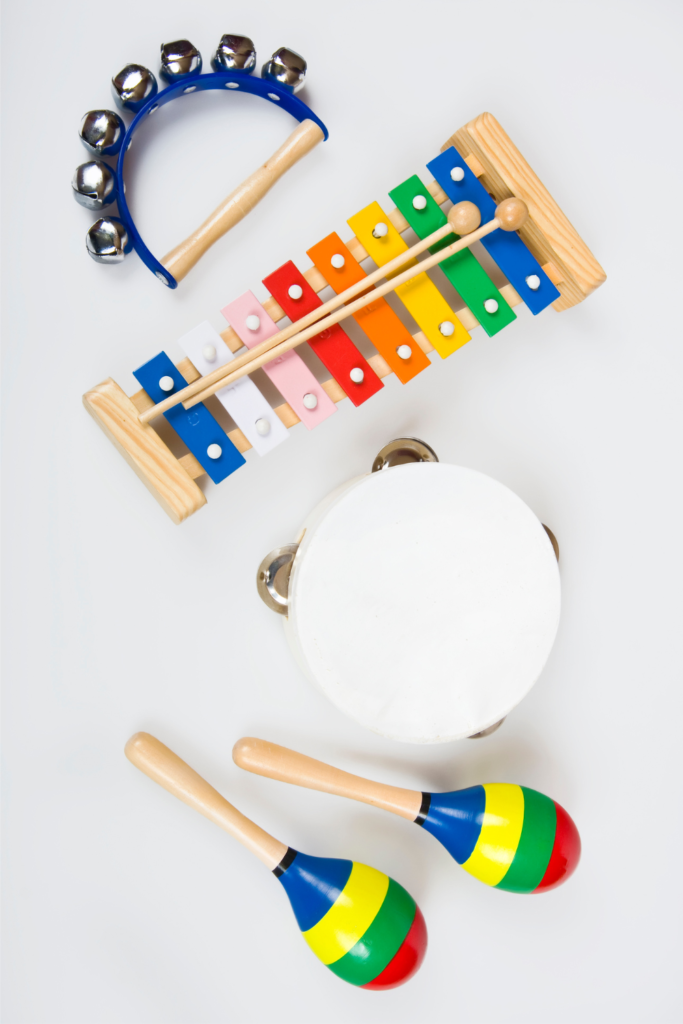
One reason I love to teach percussion instruments in elementary music is because percussion naturally combines movement, listening, visual learning, and hands-on exploration in a way young students immediately understand.
Percussion instruments are one of the best starting points for teaching instrument families in elementary music because they are:
- highly visual,
- hands-on,
- interactive,
- and immediately engaging.
Students can instantly connect movement with sound.
And this isn’t only common in the United States.
In countries like Argentina, Spain, Uruguay, and many other elementary music programs around the world, students are often introduced to small classroom percussion instruments during Kindergarten and 1st grade music classes.
Most students already recognize instruments like:
- maracas,
- tambourines,
- triangles,
- rhythm sticks,
- hand drums,
- claves,
- woodblocks,
- guiros,
- and shakers.
Because these instruments are physically available in the classroom, students can:
- touch them,
- experiment with them,
- observe them closely,
- and immediately understand how they produce sound.
This makes percussion one of the most accessible and effective elementary music units.
Phase 1 - Teaching Classroom Percussion Instruments Through Hands-On Exploration
When I begin teaching percussion instruments, I usually start with live classroom percussion instruments rather than worksheets or slides.
At this stage, students explore:
- how instruments are played,
- how movement creates sound,
- and how percussion instruments can sound different from one another.
We discuss questions like:
- Is this instrument shaken, scraped, or struck?
- Does it produce a long sound or a short sound?
- Is the sound high or low?
- Loud or soft?
The goal at this stage is not memorization.
The goal is familiarity and exploration.
Teaching Orchestral Percussion Instruments in Grades 2–4
Later, in grades 2–4, I begin expanding students’ understanding beyond classroom percussion and introduce orchestral percussion instruments.
This is where videos and visual presentations become extremely helpful because most classrooms don’t have instruments like:
- timpani,
- marimba,
- vibraphone,
- orchestral snare drum,
- concert bass drum,
- suspended cymbal,
- or tubular bells.
At this stage, we watch:
- short performance videos,
- orchestra clips,
- close-up demonstrations,
- and listening examples.
Students compare instruments and begin noticing:
- pitched vs. unpitched percussion,
- mallet instruments,
- orchestral setups,
- and different playing techniques.
This creates a natural bridge between:
classroom percussion → orchestral percussion → classification → listening activities.
Reinforcing Learning with Percussion Worksheets
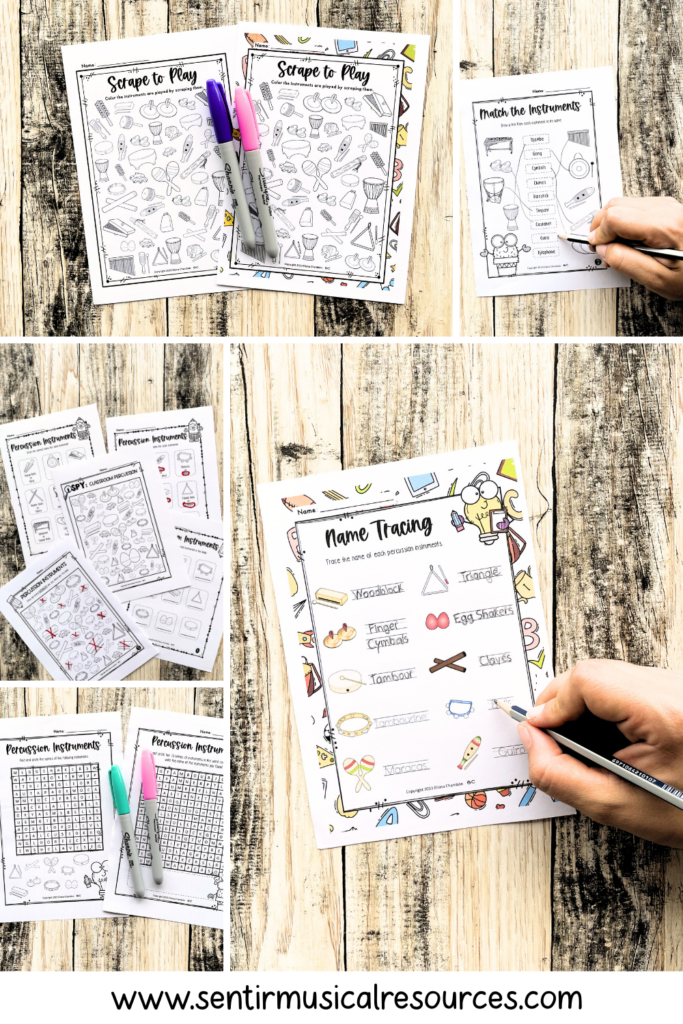
After students visually and physically explore percussion instruments, I reinforce the learning through classification and recognition activities.
This may include:
- matching instrument names,
- sorting instruments,
- tracing vocabulary,
- identifying percussion instruments,
- and classifying instruments by how they are played.
👉 Explore my printable percussion worksheets and activities for elementary music.
These activities work beautifully for:
- independent work,
- centers,
- sub plans,
- and early finishers.
🇺🇸 Explore the Classroom Percussion Instruments Worksheets
🇪🇸 Explora las Actividades de Instrumentos de Percusión para el Aula
Using Percussion Memory Games for Review and Music Centers
I love ending lessons with games because students immediately become more engaged.
One of my favorite activities is using percussion memory cards.
Students can match:
- instrument to instrument,
- instrument to word,
- or instrument to classification.
Games make review feel natural instead of academic.
And students begin reinforcing vocabulary without even realizing they’re practicing.
Perfect for:
- music centers,
- small groups,
- and station rotations.
Free Music Teaching Resources
Get free printable music worksheets, teaching tips, and low-prep activities for rhythm, piano, ukulele, music theory, and elementary music.
No spam. Just practical ideas and free resources for music teachers.
You're in! Thank you for subscribing.
Please check your inbox soon. I’ll be sending free music teaching resources, classroom ideas, and low-prep activities to support your lessons.
Phase 2 — Games to Teach Percussion Instruments in Elementary Music
Using centers and games to teach percussion instruments in elementary music helps students reinforce vocabulary and classification skills through active learning instead of passive memorization.
Once students recognize percussion instruments visually, I move into game-based reinforcement and music centers.
This is where the classroom becomes much more active and collaborative.
Option 1 — Centers by Instrument Type
Each station focuses on a different percussion activity.
For example:
Percussion Memory Station
Students match percussion instruments using memory cards.
Sorting & Classification Station
Students classify instruments by:
- shaken,
- scraped,
- struck,
- or tapped.
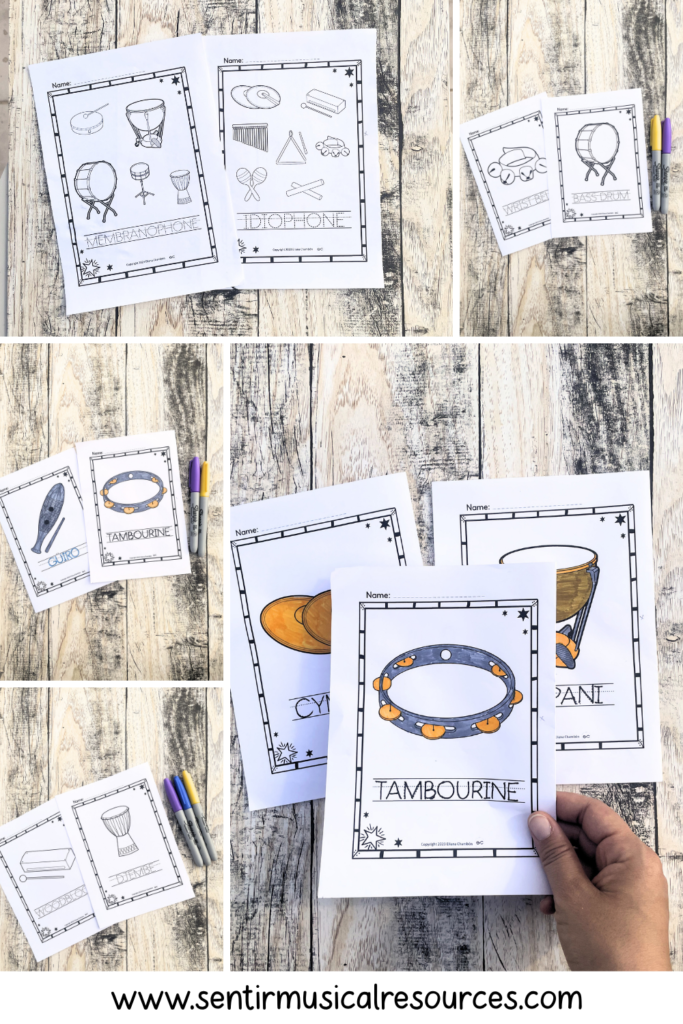
Color by Instrument Family Station
Students color percussion instruments according to classification.
For younger learners, coloring activities can be a simple way to reinforce percussion instrument recognition before moving into classification or listening games.
🇺🇸 Try the Percussion Instruments Coloring Pages
🇪🇸 Prueba las Actividades para Colorear Instrumentos de Percusión
I Spy Percussion Station
Students search for hidden instruments and identify them.
Option 2 — Activity-Based Centers
Sometimes I organize centers by activity type instead of instrument type.
For example:
- Memory Game Center
- Sorting Center
- Coloring Center
- Listening Center
- Treasure Hunt Center
This setup works especially well once students already recognize the instrument families and simply need reinforcement through repetition and play.
A Percussion Treasure Hunt Idea
One percussion activity I’m currently developing is a treasure hunt classification game inspired by escape-room style learning activities.
Students would:
- find percussion instrument cards,
- identify the instrument,
- and place them into the correct “treasure chest” based on classification.
This could work as:
- a competitive team game,
- a cooperative challenge,
- or an independent music center.
Because honestly?
Elementary music students learn best when movement and play are involved.
Looking for a low-prep percussion listening activity that students genuinely get excited about?
Percussion Bingo is one of the most engaging ways to practice instrument recognition and active listening in elementary music.
🇺🇸 Get the Percussion Music Bingo Game
🇪🇸 Consigue el Juego de Bingo de Instrumentos de Percusión
“Save this idea for later
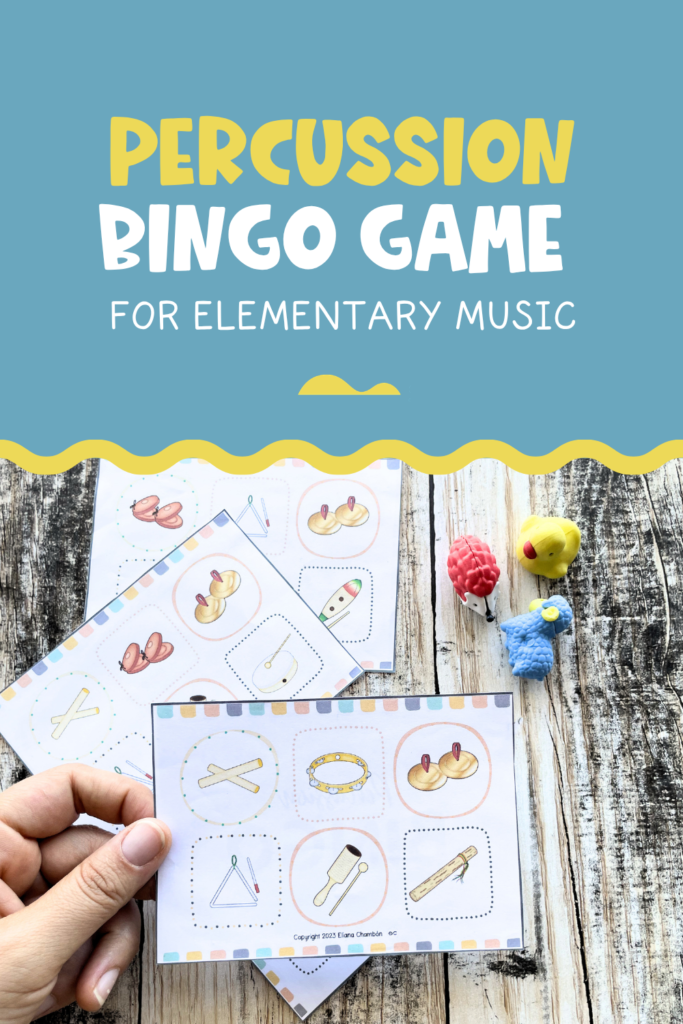
Ready for a fun percussion listening activity?
🇺🇸 Get the Percussion Music Bingo Game
🇪🇸 Consigue el Juego de Bingo de Instrumentos de Percusión
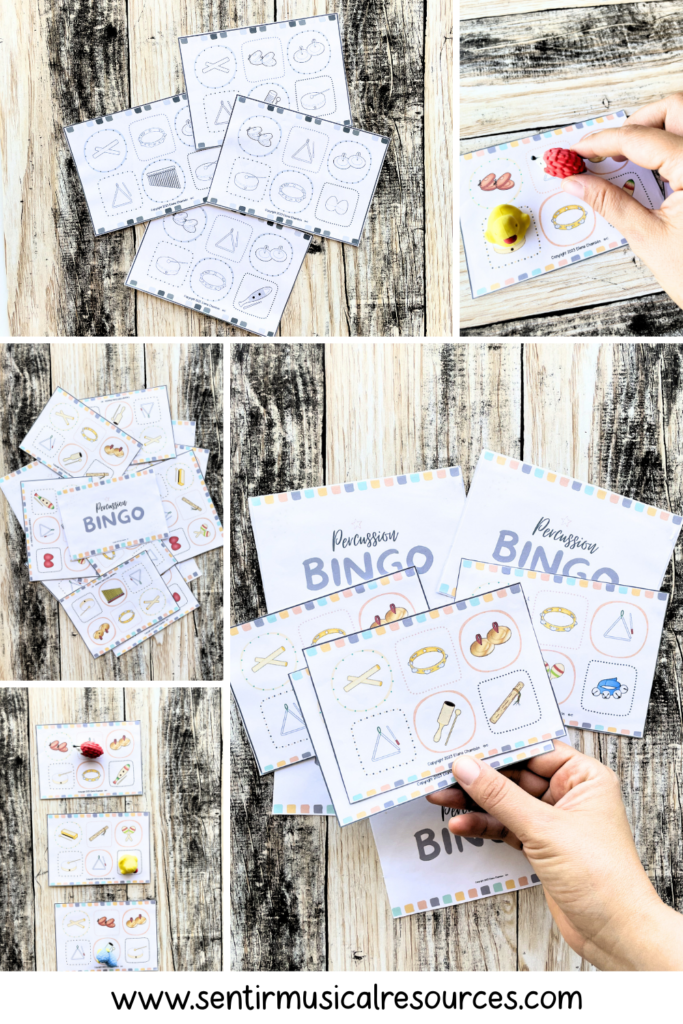
Percussion Bingo: The Game That Changed My Teaching
Of all the percussion activities I use, Percussion Bingo is probably the most meaningful to me personally because it connects directly to that first childhood music bingo experience.
And it completely changed the energy of my classroom.
Option 1 — Visual Percussion Bingo
Students identify percussion instruments visually and mark them on their bingo boards.
Perfect for:
- Kindergarten,
- 1st grade,
- and beginner learners.
Option 2 — Name Recognition Bingo
I call out percussion instrument names and students identify the matching image.
This reinforces:
- music vocabulary,
- visual recognition,
- and instrument identification.
Option 3 — Auditory Percussion Bingo (My Favorite)
This is the version I use the most.
Students hear percussion sounds and identify the correct instrument on their bingo boards.
You can:
- play live instruments,
- use recorded sounds,
- hide behind a screen,
- or use digital audio clips.
Suddenly the game becomes:
- auditory discrimination,
- ear training,
- active listening,
- and musical recognition practice.
It can be used both visually and auditorily, making it perfect for differentiated instruction.
Why Listening Activities Work Better AFTER Visual Recognition
One of the biggest shifts in my teaching happened when I stopped starting instrument units with listening tests.
Because for many students, isolated listening activities feel overwhelming without visual context.
But once students have already:
- seen the instrument,
- played with it,
- classified it,
- talked about it,
- and compared it,
then hearing the sound suddenly makes sense.
The sound connects to an image already stored in their mind.
And that’s when real musical recognition begins.
Building a Complete Percussion Unit in Elementary Music
One reason I eventually created a complete percussion bundle was because I remembered what it felt like searching for disconnected materials as a teacher.
So instead of isolated activities, I designed resources that work progressively together:
- worksheets,
- memory games,
- bingo activities,
- tracing pages,
- listening games,
- sorting activities,
- and music centers.
The bundle is designed to help elementary music teachers teach percussion through:
- play,
- listening,
- visual recognition,
- movement,
- and hands-on learning.
Want everything in one place?
The Percussion Games & Worksheets Bundle combines worksheets, bingo, coloring activities, listening practice, and review games so you can build a complete percussion unit without searching for separate resources.
🇺🇸 Shop the Percussion Games & Worksheets Bundle
🇪🇸 Explora el Paquete de Juegos y Actividades de Percusión
“Save this idea for later
Final Thoughts
Sometimes we don’t realize that the games that impacted us as children end up shaping the teachers we become.
That simple sound bingo from a small rural school in Uruguay eventually became part of the way I design elementary music resources today.
And honestly?
That’s one of the things I love most about teaching music.
The games students play today might become musical memories they carry for years.
If you’re looking for new ways to teach percussion instruments in elementary music, combining visual learning, movement, games, and listening activities can make a huge difference in student engagement and retention.
Happy teaching 🎵
FAQ: Teaching Percussion Instruments in Elementary Music
What percussion instruments should elementary students learn first?
Students often begin with classroom percussion instruments such as maracas, tambourines, rhythm sticks, triangles, claves, and hand drums because they are easy to explore through movement and sound.
How do you teach percussion instruments in elementary music?
A visual-first approach works well. Students can explore instruments hands-on, classify them, use worksheets and games, and then move into listening activities.
What are the best percussion activities for elementary music?
Percussion bingo, memory games, sorting activities, coloring pages, listening games, and music centers all help students develop recognition and classification skills.
Can percussion bingo be used for listening practice?
Yes. Percussion bingo works well for auditory discrimination because students listen to instrument sounds and identify the matching percussion instrument.
Related Percussion Resources
🇺🇸 Get the Percussion Music Bingo Game
🇪🇸 Consigue el Juego de Bingo de Instrumentos de Percusión
🇺🇸 Explore the Classroom Percussion Instruments Worksheets
🇪🇸 Explora las Actividades de Instrumentos de Percusión para el Aula
🇺🇸 Try the Percussion Instruments Coloring Pages
🇪🇸 Prueba las Páginas para Colorear Instrumentos de Percusión
🇺🇸 Shop the Percussion Games & Worksheets Bundle
🇪🇸 Explora el Paquete de Juegos y Actividades de Percusión
🇺🇸 Explore the Musical Instruments MEGA Bundle
🇪🇸 Explora el Mega Paquete de Instrumentos Musicales