“Save this idea for laterÂ
Learning how to teach music theory in an engaging way can feel challenging, especially with young beginners.
Most students walk into music class excited to sing, move, play instruments, and participate in games. But as soon as notation appears, that excitement can disappear. Music theory quickly becomes something they think they have to memorize instead of something they get to experience.
Â
For years, I thought the answer was to find better worksheets.
Â
Eventually, I realized I was asking the wrong question.
Â
Instead of wondering, “Which worksheet should I use?”, I started asking myself:
Â
“How can I help students experience music before asking them to explain it?”
Â
That simple shift changed the way I teach music theory.
Â
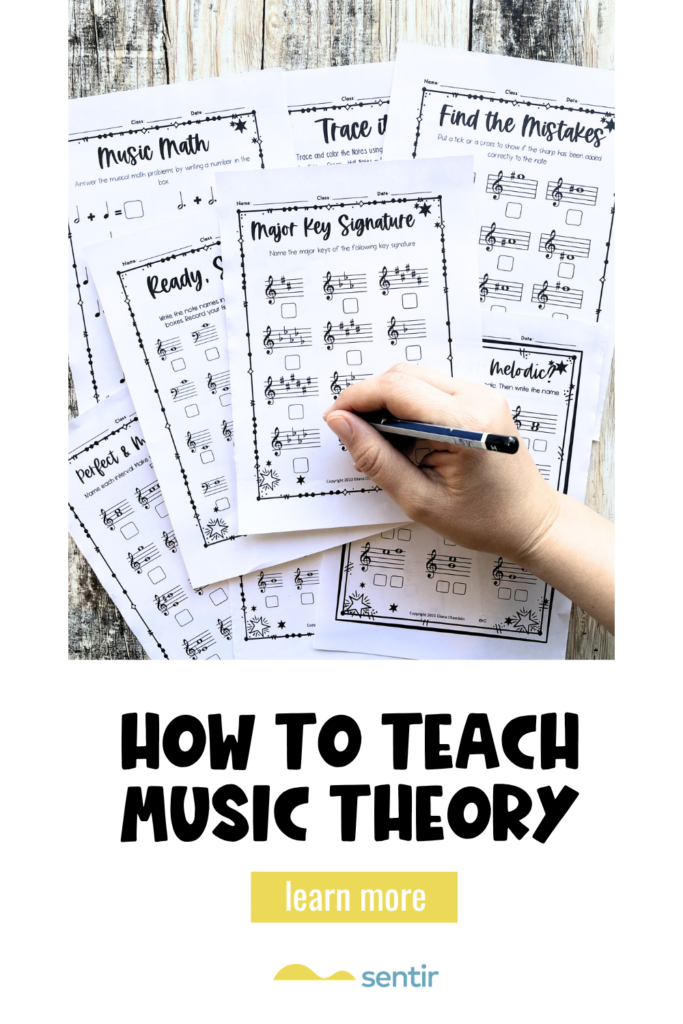
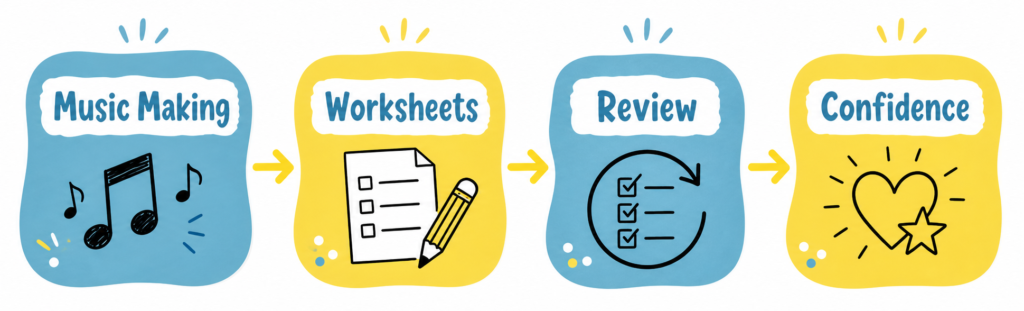
Today, I still use printable activities and worksheets regularly, but they no longer introduce new concepts. Instead, they reinforce ideas students have already explored through singing, movement, listening, games, improvisation, composition, and performance.
Â
I’ve found that when students already understand a musical idea, written activities stop feeling like isolated exercises. Instead, they become another opportunity to organize, review, and deepen learning.
Â
That’s the philosophy I want to share with you.
Â
Whether you’re teaching rhythm, note reading, intervals, or key signatures, my goal is to help you make music theory feel like a natural extension of making music—not a separate subject students simply have to memorize.
What Does Teaching Music Theory Really Mean?
When people hear the words music theory, they often imagine pages filled with note names, rhythm values, intervals, accidentals, and key signatures.
Those concepts are certainly part of music theory.
But with young musicians, I don’t believe theory should begin with vocabulary.
I believe it should begin with sound.
Long before children can explain musical concepts, they’re already experiencing them.
They notice when a melody moves higher or lower.
They feel the steady beat.
They recognize when rhythms repeat.
They hear when two musical phrases sound different.
They naturally organize musical patterns, even if they don’t yet have the language to describe what they’re hearing.
To me, that’s where music theory begins.
The written symbols simply give names to musical ideas students have already experienced.
Looking at music this way completely changed my teaching.
Instead of treating theory as an isolated unit, I now see it as another way of helping students understand the music they’re already singing, moving to, playing, creating, and listening to.
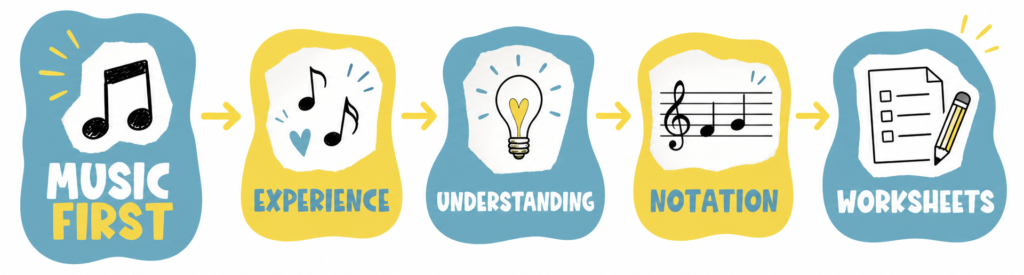
When students experience music first, notation suddenly makes sense.
My Philosophy for Teaching Music Theory
One of the biggest lessons I’ve learned over the years is that worksheets don’t teach music theory.
Music teaches music theory.
Students teach themselves through meaningful musical experiences.
Our role as teachers is to create those experiences.
Worksheets are incredibly valuable.
I use them every week.
They’re wonderful for independent practice, music centers, assessment, review, early finishers, homework, and substitute plans.
But I don’t expect a worksheet to introduce a concept that students haven’t already experienced musically.
Much of my teaching is influenced by the idea that music is learned in a way that is surprisingly similar to language.
Children don’t learn to read before they listen.
They don’t begin by memorizing grammar rules.
They spend years listening, speaking, experimenting, and communicating before written language becomes meaningful.
Music follows a similar path.
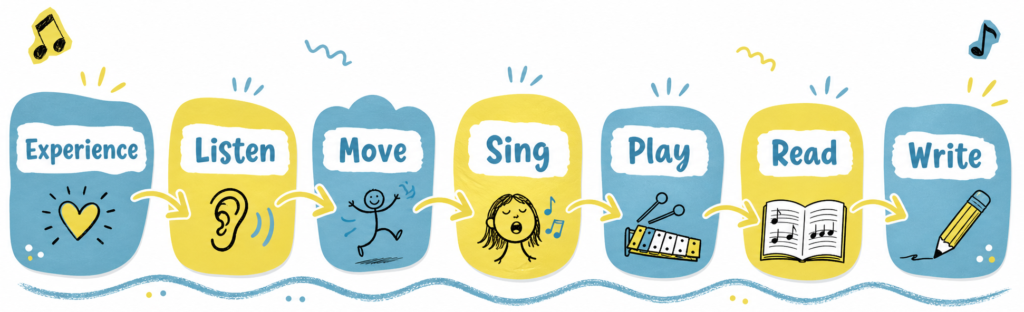
Before students confidently read notation, they need opportunities to listen, move, sing, imitate, play, improvise, and create.
Only after those experiences do written symbols begin to represent something meaningful.
That’s why I don’t think of worksheets as the lesson.
I think of them as one of the final steps in the learning process.
They help students organize what they already understand.
And that’s when they’re most effective.
My Basic Sequence for Teaching Music Theory
Although every classroom is different, I often follow a similar sequence whenever I introduce a new concept.
Rather than beginning with notation, I begin with music.
My lessons usually look something like this:
- Listen to the music.
- Move to what we hear.
- Sing, clap, or play the musical pattern.
- Create something using the new idea.
- Talk about what students noticed.
- Introduce the visual symbol.
- Practice through games and collaborative activities.
- Reinforce learning with printable activities.
This sequence doesn’t always happen in a single lesson.
Sometimes it takes several classes.
Sometimes we revisit the same concept over many weeks.
That’s perfectly normal.
Learning music is a gradual process.
When students experience music before seeing notation, they aren’t memorizing symbols.
They’re connecting those symbols to sounds they’ve heard, movements they’ve felt, and musical ideas they’ve already experienced.
That connection is what transforms music theory into genuine music literacy.
Looking for Ready-to-Use Music Theory Activities?

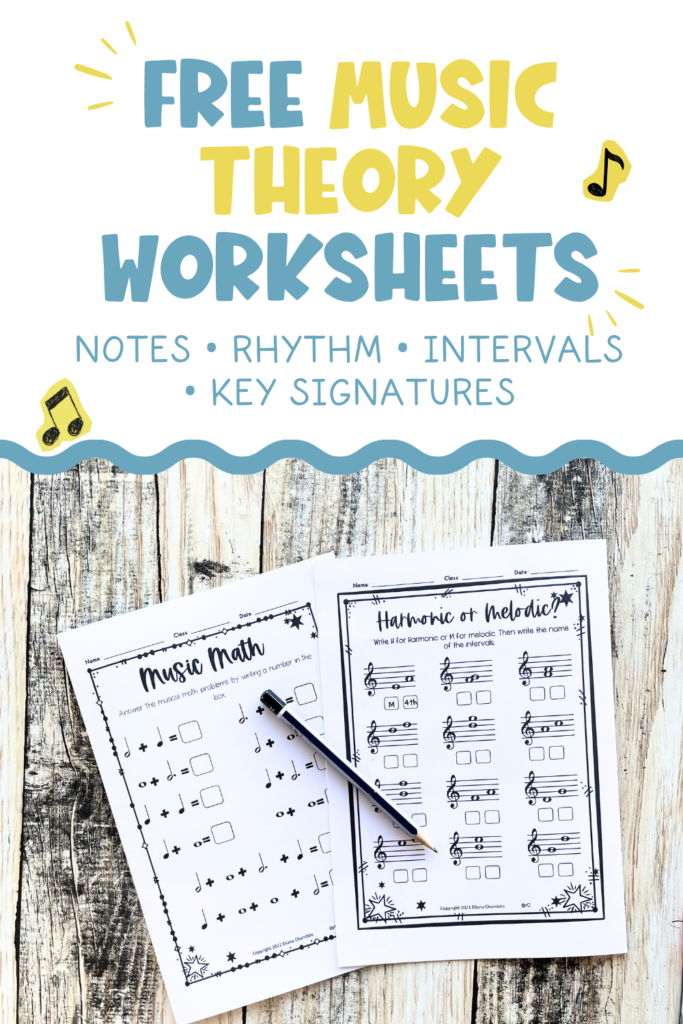
If you’d like to try this approach in your own classroom, I’ve created a Free Music Theory Worksheets Sampler that includes printable activities for notes, rhythm, intervals, and key signatures.
It’s a simple way to explore the kinds of reinforcement activities I use after students have experienced these concepts through singing, movement, games, and performance.
Free Music Theory Worksheets Sampler
Gratis Muestra de Fichas de TeorÃa musical
 “Save this idea for laterÂ
Free Music Theory Worksheets Sampler
Gratis Muestra de Fichas de TeorÃa musical
Teaching Rhythm
Rhythm is usually the first area of music theory I introduce because students can experience it with their whole body.
Long before we look at notation, we move, clap, chant, listen, and create rhythm patterns together.
I want students to feel rhythm before they see rhythm.
Once they can confidently perform simple patterns, introducing notation becomes much easier because the symbols already represent something familiar.
For beginners, I usually start with quarter notes, paired eighth notes, and quarter rests. These rhythm values appear frequently in the songs and activities we use in class, making them a natural starting point.
Only after students have experienced these patterns through movement, performance, and games do I introduce printable activities.
At that point, worksheets become a way to reinforce learning rather than introduce it.
Students might practice identifying rhythm patterns, completing music math activities, composing short rhythms, or reviewing note values independently.
Because the musical understanding already exists, the written practice feels purposeful instead of overwhelming.
Looking for Ready-to-Use Rhythm Activities?
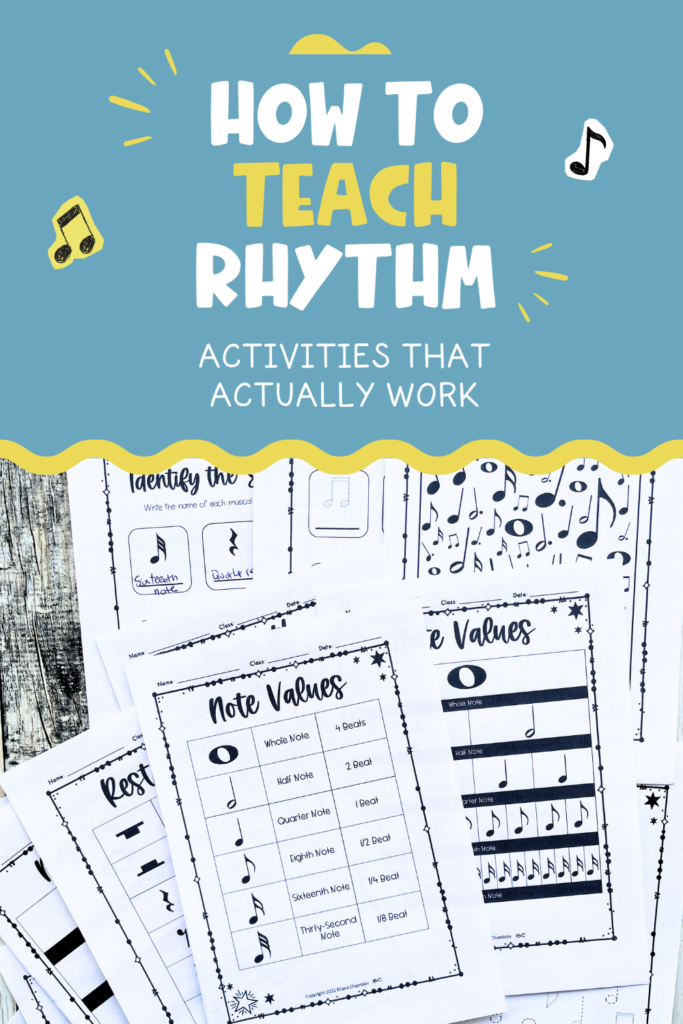
If you’re looking for printable activities to reinforce rhythm concepts, I’ve created a collection of 80+ rhythm worksheets and games designed for elementary music students.
The activities include rhythm reading, music math, composition, rhythm identification, review pages, and independent practice that work well after students have experienced rhythm through movement, listening, and classroom games.
Explore the Rhythm Music Theory Worksheets
Descubre las fichas de teorÃa musical sobre ritmo
 “Save this idea for laterÂ
Teaching Note Reading
Learning to read music is much more than memorizing note names.
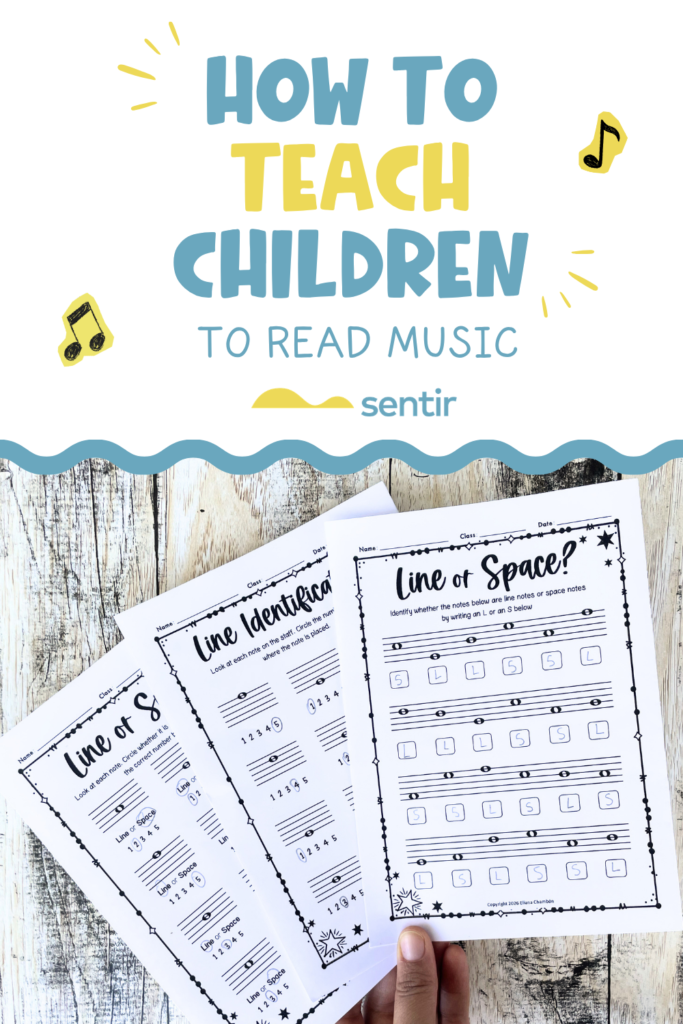
Before students identify individual notes on the staff, I like to help them recognize musical patterns through singing, movement, visual activities, and games.
By exploring concepts like high and low sounds, melodic direction, steps, and skips first, students develop a much stronger understanding of how notation represents music.
Once they’re ready, printable activities become an excellent way to reinforce note recognition and build confidence through independent practice.
If you’d like to see my complete approach—including the floor staff, color coding, singing activities, note-reading games, and printable worksheets—you can read my full guide below.
👉 Read: How I Teach Note Reading to Beginners (Coming Soon)
 “Save this idea for laterÂ
Teaching Intervals
Intervals often feel abstract for beginners, so I like to connect them to sound before expecting students to identify them on paper.
We sing patterns, compare melodic movement, and explore steps, skips, and leaps through games and movement activities.
As students become familiar with these relationships, they begin recognizing the same patterns visually on the staff.
That’s when interval practice becomes much more meaningful.
Printable activities help students review interval names, identify patterns, and strengthen visual recognition while reinforcing ideas they’ve already explored musically.
Looking for Ready-to-Use Interval Activities?
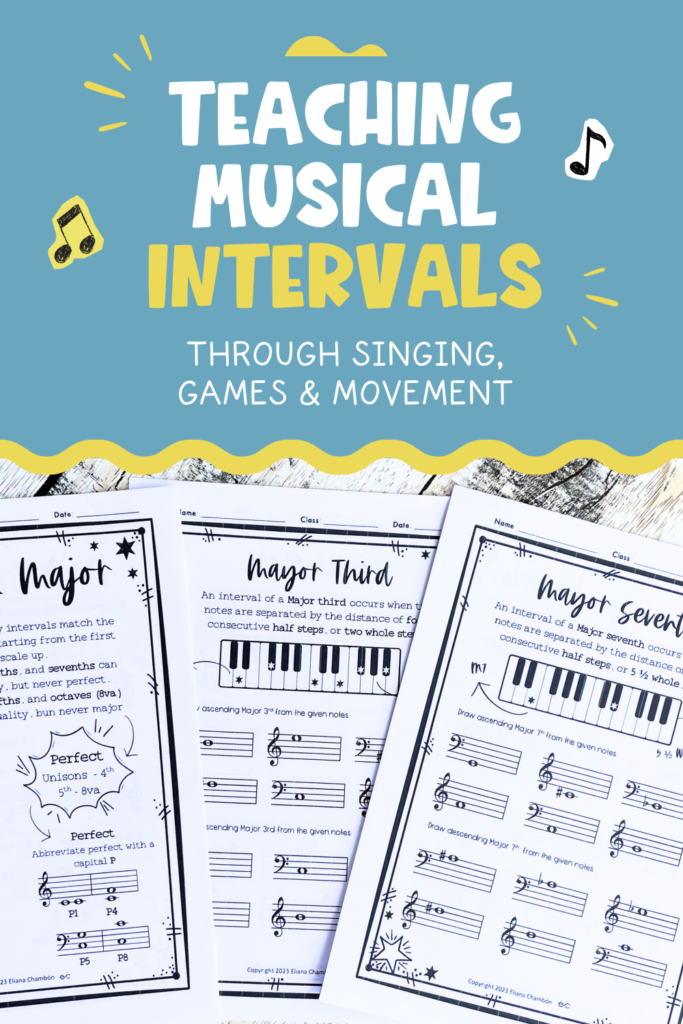
Helping students understand intervals takes time and repeated practice. After exploring melodic movement through singing, games, and listening activities, printable exercises can reinforce those concepts in a simple and engaging way.
If you’re looking for ready-to-use interval activities, explore my Intervals Music Theory Worksheets, which include printable practice for identifying intervals, recognizing patterns, and strengthening visual music reading skills.
Explore the Intervals Music Theory Worksheets
Descubre las fichas de teorÃa musical sobre intervalos
 “Save this idea for laterÂ
Explore the Intervals Music Theory Worksheets
Descubre las fichas de teorÃa musical sobre intervalos
Teaching Key Signatures and Accidentals
Key signatures are often more advanced for elementary students, but they can still be introduced in a visual and approachable way.
I usually avoid presenting key signatures as a memorization chart first.
Instead, I like to build understanding gradually:
- sharps and flats as symbols that change pitch
- accidentals in short examples
- patterns of sharps and flats
- major key signatures
- minor key signatures
- circle of fifths
- key signature identification
- review through games and worksheets
For many students, key signatures become easier when they can see the pattern visually.
This is where printable music theory activities can be very helpful because students need repeated, clear practice. Key signatures are not usually mastered from one lesson. They need short, consistent review over time.
Looking for Key Signature Activities?
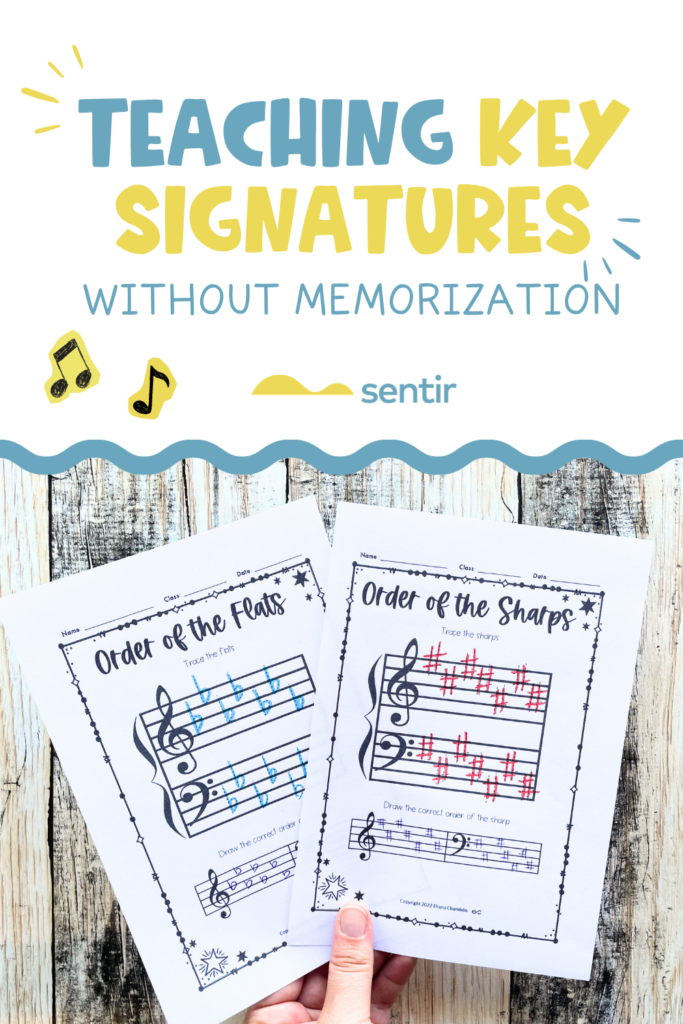
If you’re looking for ready-to-use activities to reinforce key signatures and accidentals, explore my Key Signatures Music Theory Worksheets. They include printable practice designed to help students recognize patterns, identify major and minor key signatures, and build confidence through consistent review.
Explore the Key Signatures Music Theory Worksheets
Descubre las fichas de teorÃa musical sobre armaduras de clave
 “Save this idea for laterÂ
Explore the Key Signatures Music Theory Worksheets
Descubre las fichas de teorÃa musical sobre armaduras de clave
Where Worksheets Fit
Worksheets sometimes get a bad reputation in music education.
And honestly, I understand why.
If students spend an entire lesson completing written exercises without first experiencing the music, it’s easy for music theory to become disconnected from making music.
But I’ve found that worksheets become incredibly valuable when they’re used at the right moment.
In my classroom, printable activities help students:
Review concepts they’ve already explored.
Practice independently.
Build confidence through repetition.
Reinforce visual recognition.
Work in music centers.
Prepare for assessments.
Complete meaningful early finisher activities.
Continue learning with substitute teachers.
The worksheet isn’t the lesson.
It’s one part of a much larger learning experience.
When students have already listened, moved, sung, played, created, and discussed a musical concept, written practice simply helps organize and strengthen that understanding.
That’s why I continue using printable activities every year.
Not because they replace music-making.
But because they support it.
Looking for a Complete Music Theory Resource?
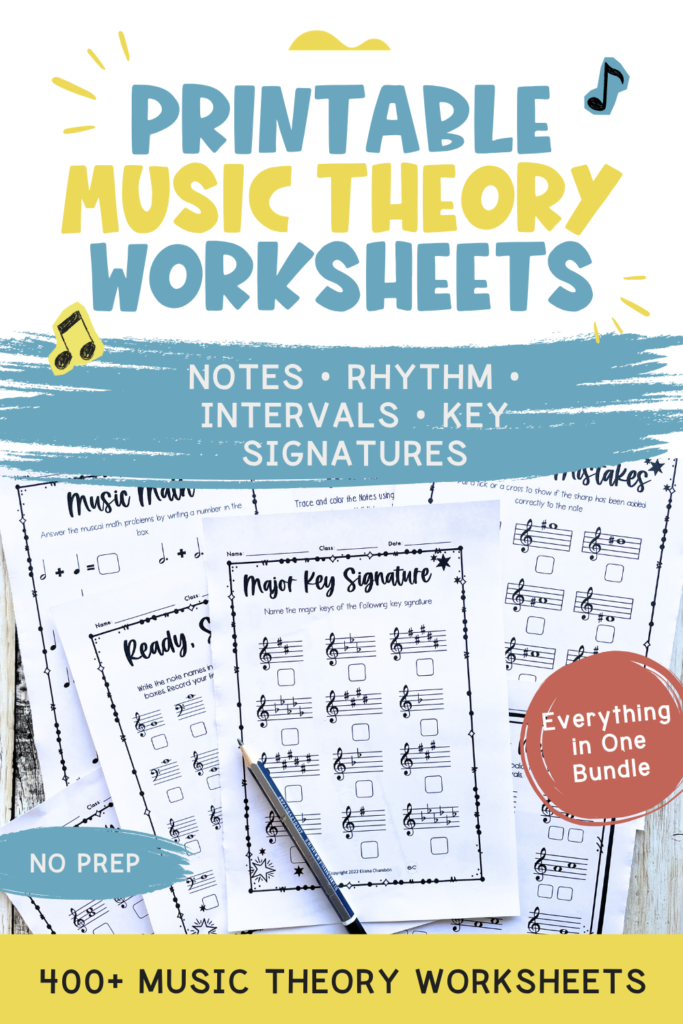
If you’re looking for a comprehensive collection of printable music theory activities, my Music Theory Worksheets Mega Bundle brings together all of the concepts I’ve discussed throughout this article in one organized resource.
It includes activities for:
Music Notes
Rhythm
Intervals
Key Signatures
Music Symbols
Treble Clef
Bass Clef
Ledger Lines
Musical Alphabet
And many other essential music theory concepts.
Rather than searching for individual activities throughout the year, you’ll have a growing library of printable resources ready whenever your students need extra practice, review, assessment, or independent work.
Whether you teach elementary general music, piano lessons, small group classes, or private students, the bundle is designed to support music learning while fitting naturally into your own teaching style.
👉 Explore the Music Theory Worksheets Mega Bundle
👉 Descubre el Mega Paquete de Teoria Musical.
 “Save this idea for laterÂ
👉 Explore the Music Theory Worksheets Mega Bundle
👉 Descubre el Mega Paquete de Teoria Musical.
Frequently Asked Questions
What is the best way to teach music theory to beginners?
In my experience, students learn music theory more successfully when they experience music before they learn the written symbols. Listening, singing, movement, games, and performance provide the foundation that makes notation meaningful.
Should students learn music theory before learning an instrument?
Not necessarily.
I've found that theory and performance support each other. Students understand written music much more easily when they can connect it to songs they're singing, rhythms they're performing, or instruments they're playing.
Are music theory worksheets effective?
Absolutely, when they're used to reinforce learning rather than introduce it.
Worksheets are excellent for review, independent practice, music centers, assessment, homework, and substitute plans. They're most effective after students have already experienced the musical concept.
What music theory concepts should beginners learn first?
I usually begin with rhythm, steady beat, note reading, and simple music symbols before introducing more advanced concepts like intervals, accidentals, and key signatures.
How often should students practice music theory?
Short, regular review sessions tend to be much more effective than teaching theory as a single unit. Revisiting concepts throughout the year helps students build lasting music literacy.
Can music theory be taught through games?
Absolutely.
Games encourage repetition without feeling repetitive. They're one of my favorite ways to help students build confidence before moving into independent written practice.
Final Thoughts
Teaching music theory doesn’t have to mean choosing between active music-making and written practice.
The two work best together.
When students first sing, move, listen, play, and create, written notation becomes much more than a collection of symbols on a page.
It becomes a way of understanding music they’ve already experienced.
That’s the biggest lesson I’ve learned over the years.
Music comes first.
Theory helps students describe and understand what they’ve experienced.
Worksheets simply reinforce that learning.
When we teach music theory this way, we’re not just helping students complete another page of exercises.
We’re helping them become confident, independent, and thoughtful musicians who understand the language of music.
Related Articles
Continue learning with these guides:
👉 How to Teach Rhythm in Elementary Music
👉 15 Rhythm Games for Music Class
👉 How to Teach Children to Read Music