

If you’ve ever wondered how to teach instrument families in elementary music in a way that actually sticks, this visual-first approach can make a huge difference.
After years teaching grades 2–4, I realized students identify instruments much more successfully when they first learn to recognize them visually before moving into listening activities.
Instead of starting with isolated listening examples, I begin with photos, videos, performances, sorting activities, and visual classification games that help students build strong mental connections between instruments and their families.
In this post, I’m sharing the exact sequence I use to teach instrument families in elementary music — from first visual exposure to listening games, music centers, worksheets, and auditory recognition activities.
Teaching instrument families in elementary music becomes much easier when students first build strong visual connections with the instruments before moving into listening and auditory identification activities.
🎵 Looking for a ready-to-use instrument families sorting activity?
If you want students to review strings, woodwinds, brass, and percussion in a hands-on way, this Musical Instrument Families Sorting Activity turns instrument classification into a treasure hunt game for music class.
Students identify each instrument family and sort the cards into the correct treasure chest, making it perfect for music centers, review lessons, early finishers, and sub plans.
🇺🇸 Explore the Musical Instrument Families Sorting Activity
🇪🇸 Explora la Actividad de Clasificación de Familias de Instrumentos Musicales
 “Save this idea for later
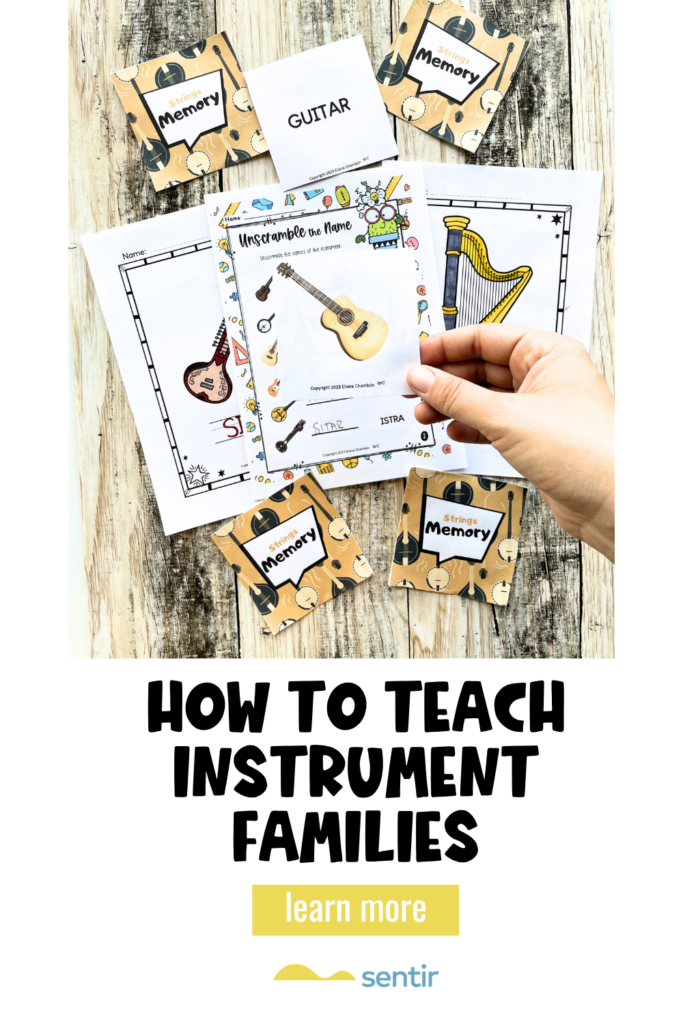
Looking for ready-to-use instrument family activities for elementary music?
Explore worksheets, games, listening activities, bingo, music centers, and printable resources designed to help students learn and review musical instrument families through active and engaging lessons.
🇺🇸 Explore the Musical Instruments MEGA Bundle
🇪🇸 Explora el MEGA Bundle de Instrumentos Musicales
Why Visual Recognition Helps Teach Instrument Families in Elementary Music
One thing I’ve learned from teaching elementary music is that students need context before listening can become meaningful.
If a child hears an oboe sound without ever seeing an oboe before, the sound often feels abstract. It passes by without attaching itself to anything concrete.
But when students have already:
- seen the instrument,
- noticed its shape,
- compared it to similar instruments,
- watched someone play it,
- and learned its name,
then hearing the sound becomes a powerful “Ohhh… THAT’S what it sounds like!” moment.
That connection is what makes learning stick.
This is the sequence I use in my classroom:
SEE → RECOGNIZE → CLASSIFY → PLAY → LISTEN → IDENTIFY
Each phase prepares students for the next one.
Free Music Teaching Resources
Get free printable music worksheets, teaching tips, and low-prep activities for rhythm, piano, ukulele, music theory, and elementary music.
No spam. Just practical ideas and free resources for music teachers.
You're in! Thank you for subscribing.
Please check your inbox soon. I’ll be sending free music teaching resources, classroom ideas, and low-prep activities to support your lessons.
Phase 1 — Teaching Instrument Families in Elementary Music Through Visual Presentation
Before teaching instrument families in elementary music through listening activities, students first need to visually recognize and connect with the instruments themselves.
I never begin with worksheets.
I begin with presentation.
For grades 2–4, students usually already know some instruments from previous years. In first grade, many have already explored classroom percussion instruments or basic orchestral instruments.
So at this stage, the goal becomes:
- classifying instruments into families,
- introducing new instruments,
- comparing instruments,
- and expanding vocabulary.
I usually begin with the string family because percussion is often more familiar from earlier grades.
Presenting the String Family
I prepare a PowerPoint with:
- large instrument photos,
- short performance videos,
- audio examples,
- and close-up visuals showing how instruments are played.
We explore questions like:
- Have you seen this instrument before?
- What do you think it sounds like?
- How is a violin different from a cello?
- Which instruments are bowed?
- Which are plucked?
Students compare instruments visually before we ever ask them to identify sounds independently.
This phase is intentionally discussion-based and exploratory.
No pressure. No testing.
Just observation and curiosity.
Reinforcing Learning with Worksheets
After the visual presentation, students complete simple activities focused on recognition and classification.
This might include:
- matching instrument names,
- sorting by family,
- identifying string instruments,
- tracing vocabulary,
- or classifying pictures.
These activities help students organize the information they just explored visually.
At this stage, students are developing the visual recognition skills needed for successful instrument family identification in elementary music classes.
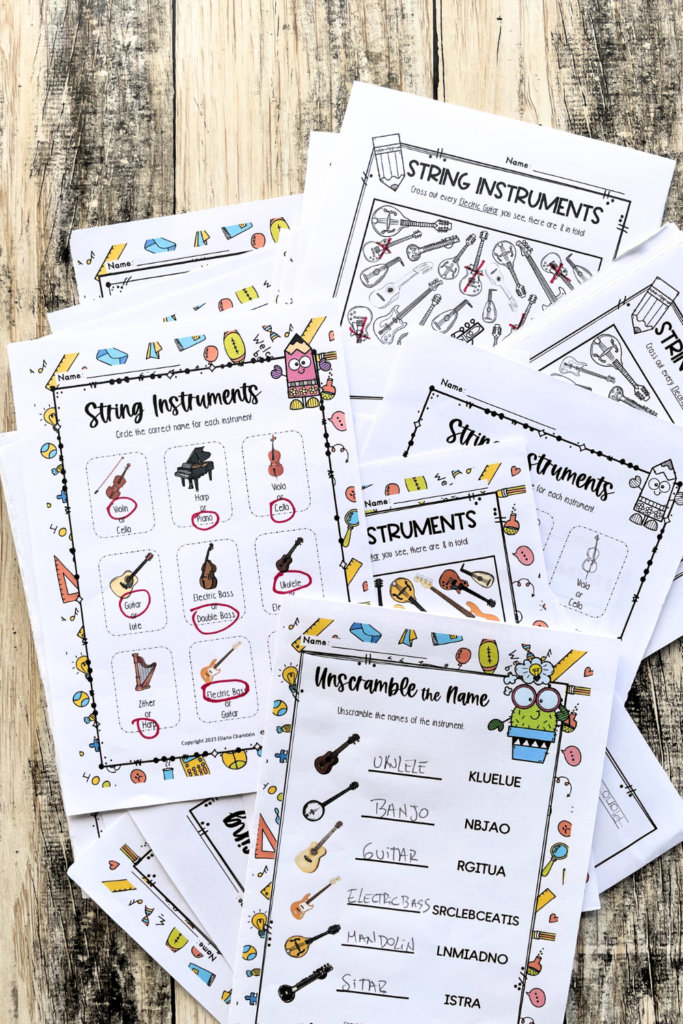
Musical Instruments Worksheets Bundle — Strings, Wind & Percussion
Perfect for reinforcing instrument family recognition through visual classification, matching activities, sorting exercises, and independent practice.
Students review string, wind, and percussion instruments while building music vocabulary and strengthening instrument family identification skills.
🇺🇸 Explore the Musical Instruments Worksheets Bundle
🇪🇸 Explora el Bundle de Hojas de Trabajo de Instrumentos Musicales
Ending the Lesson with a String Instrument Memory Game
I love ending the lesson with something playful.
One of my favorite activities is a simple memory game using only string instruments.
Students match:
- instrument to instrument,
- instrument to name,
- or instrument to family.
Games immediately increase engagement — and students begin reviewing without even realizing they’re studying.
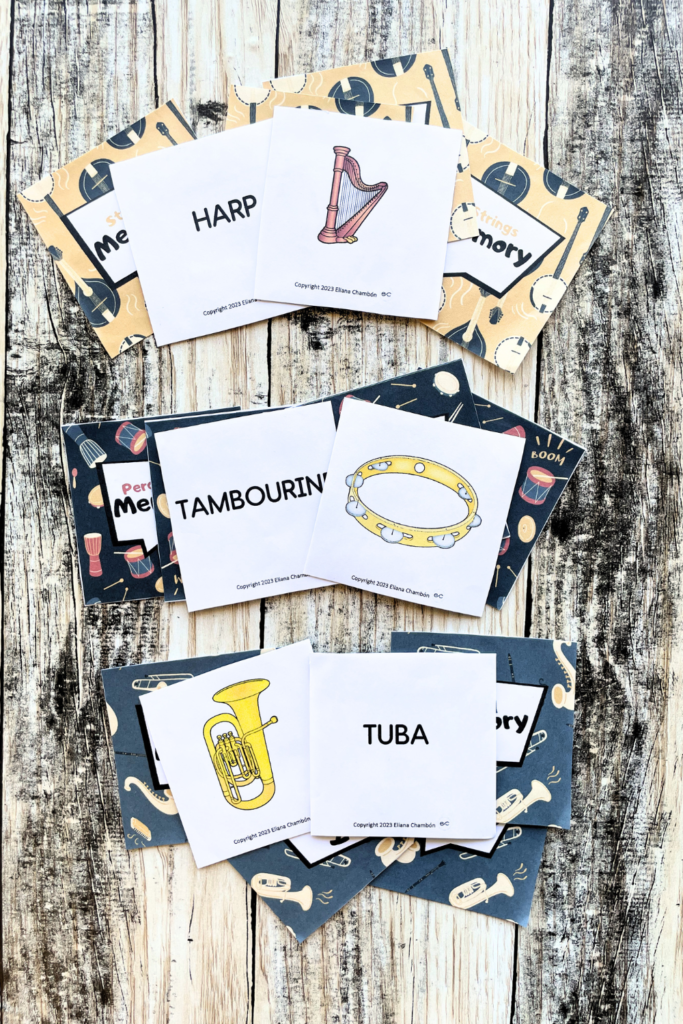
🎲 Musical Instruments Memory Games Bundle
Help students review instrument families through engaging matching games designed to reinforce instrument recognition, music vocabulary, and visual classification skills.
Perfect for elementary music centers, partner activities, early finishers, and instrument family review lessons.
🇺🇸 Explore the Musical Instruments Memory Games Bundle
🇪🇸 Explora el Bundle de Juegos de Memoria de Instrumentos Musicales
Phase 2 — Teaching Woodwind and Brass Instrument Families
On another day, we repeat the same process with the wind family.
Again, we begin visually:
- photos,
- videos,
- performances,
- comparisons,
- and discussion.
We explore questions like:
- How do these instruments produce sound?
- Which ones use reeds?
- Which ones are brass?
- Which are woodwinds?
- Why is the saxophone considered a woodwind?
This becomes especially interesting for grades 3–4 because students are old enough to start discussing how sound is produced, not just what the instruments look like.
Then students reinforce learning through:
- worksheets,
- classification activities,
- visual sorting,
- and another memory game.
These kinds of instrument family activities in elementary music help students build deeper understanding before auditory identification begins.
“Save this idea for later
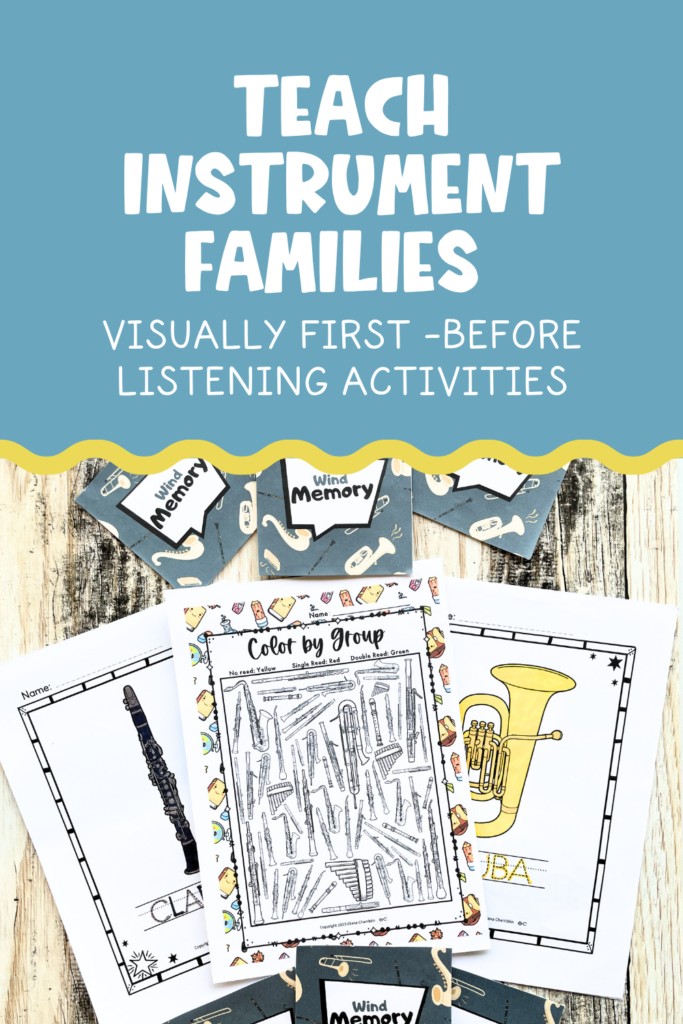
Woodwind and Brass Activities for Elementary Music
Help students identify, compare, and classify woodwind and brass instruments through engaging worksheets, games, sorting activities, and printable resources.
Perfect for reinforcing instrument family recognition, building music vocabulary, and supporting visual learning before moving into listening activities.
🇺🇸 Explore the Woodwind and Brass Instrument Activities
🇪🇸 Explora las Actividades de Instrumentos de Viento Madera y Viento Metal
Phase 3 — Teaching the Percussion Family with Visual Sorting Activities
By the time we reach percussion, students already feel more confident because many instruments are familiar.
But instead of focusing only on classroom percussion, I expand into orchestral percussion:
- timpani,
- marimba,
- xylophone,
- cymbals,
- snare drum,
- bass drum,
- triangle,
- vibraphone,
- and more.
Students begin noticing:
- pitched vs. unpitched percussion,
- mallet instruments,
- orchestral setups,
- and different playing techniques.
Again, the sequence remains:
presentation first → recognition second → games third
This gradual process makes teaching instrument families in elementary music feel much less overwhelming for students.
Phase 4 — Music Centers to Teach Instrument Families in Elementary Music
Once students recognize the three families visually, that’s when I move into music centers and game-based reinforcement.
This is where the classroom becomes much more active and collaborative.
Games are one of the most effective ways to reinforce instrument family activities in elementary music because students repeat the same concepts naturally through movement and play.
Option 1 — Centers by Instrument Family
Each station focuses on one family:
String Family Station
- string instrument memory game
- sorting cards
- worksheet activity
🇺🇸 Explore the String Family Activities Bundle
🇪🇸 Explora el Bundle de Actividades de la Familia de Cuerdas
Wind Family Station
- visual classification game
- matching activity
- instrument vocabulary practice
🇺🇸 Explore the Wind Instruments Activities Bundle
🇪🇸 Explora el Bundle de Actividades de Instrumentos de Viento
Percussion Family Station
- color-by-family activity
- percussion sorting game
- identification challenge
🇺🇸 Explore the Percussion Family Activities Bundle
🇪🇸 Explora el Bundle de Actividades de la Familia de Percusión
Students rotate through stations in small groups.
Option 2 — Centers by Activity Type
Another approach is organizing stations by activity rather than family.
For example:
Station 1 — Memory Game
All families mixed together.
🇺🇸 Explore the Musical Instruments Memory Games Bundle
🇪🇸 Explora el Bundle de Juegos de Memoria de Instrumentos Musicales
Station 2 — Sorting Activity
Students classify instruments into families through worksheets, matching activities, and visual classification tasks.
🇺🇸 Explore the Musical Instruments Worksheets Bundle
🇪🇸 Explora el Bundle de Hojas de Trabajo de Instrumentos Musicales
Station 3 — Color by Instrument Family
Students color instruments based on classification.
Station 4 — I Spy Instrument Activity
Students search for hidden instruments and identify families.
🇺🇸 Explore the I Spy Musical Instruments Activities
🇪🇸 Explora las Actividades I Spy de Instrumentos Musicales
Station 5 — Treasure Hunt Challenge
Students classify instruments into family “treasure chests.”
🇺🇸 Explore the Musical Instrument Families Sorting Activity
🇪🇸 Explora la Actividad de Clasificación de Familias de Instrumentos Musicales
This setup works especially well once students already know the families and simply need reinforcement.
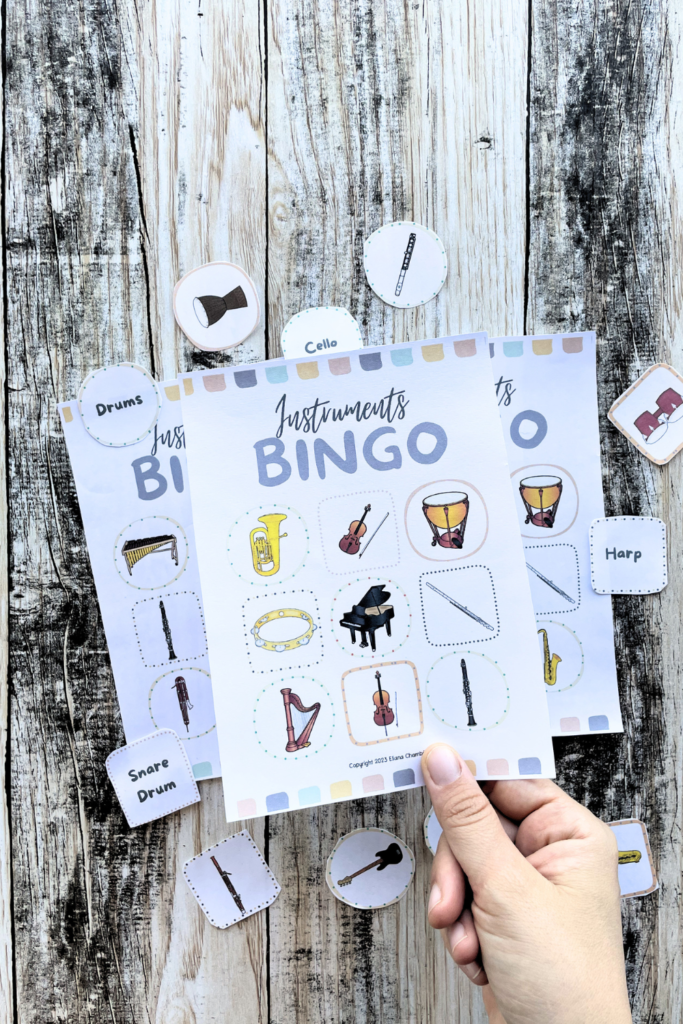
Musical Instruments Bingo Game
Make instrument review exciting with this printable Musical Instruments Bingo Game designed to reinforce instrument recognition, music vocabulary, and instrument family identification through play.
Perfect for elementary music classes, listening activities, music centers, small-group review, and whole-class participation.
🇺🇸 Explore the Musical Instruments Bingo Game
🇪🇸 Explora el Juego de Bingo de Instrumentos Musicales
Treasure Hunt Instrument Family Game Idea
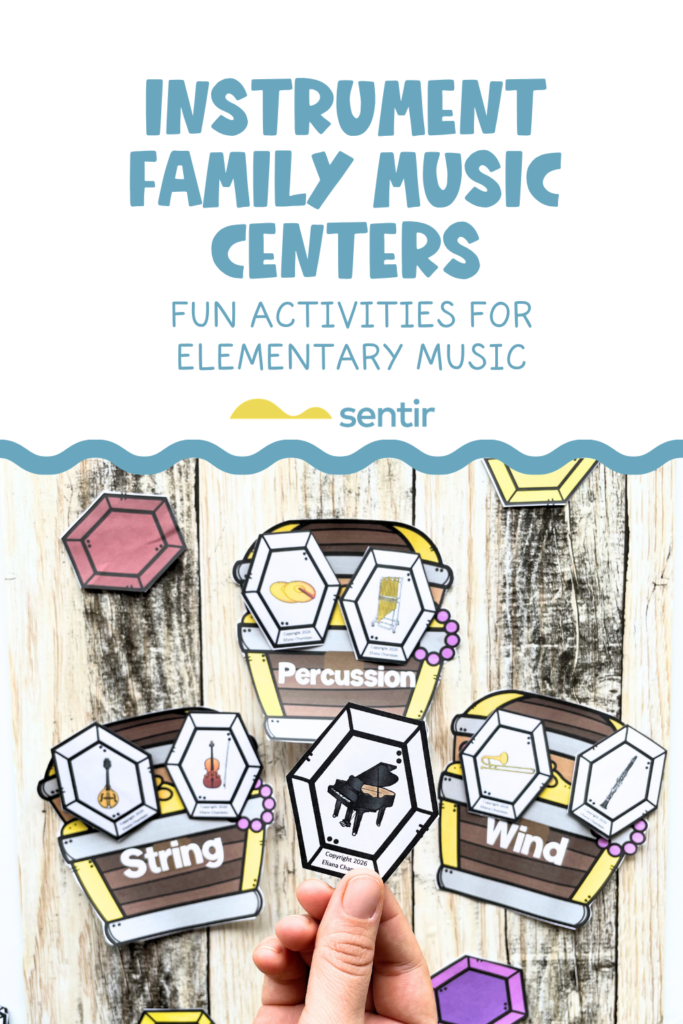
One of the easiest ways to turn instrument classification into a hands-on review activity is to use a treasure hunt sorting game.
In the Musical Instrument Families Sorting Activity, students find instrument cards, identify the correct family, and place each instrument into the correct treasure chest.
This gives students repeated practice with strings, woodwinds, brass, and percussion while keeping the lesson active and playful.
Perfect for:
✔ Music centers
✔ Small-group review
✔ Early finishers
✔ Sub plans
✔ Beginning-of-year review
✔ End-of-unit instrument family practice
🇺🇸 Explore the Musical Instrument Families Sorting Activity
🇪🇸 Explora la Actividad de Clasificación de Familias de Instrumentos Musicales
“Save this idea for later
Looking for more ways to teach instrument families?
Explore a collection of worksheets, games, listening activities, bingo, sorting activities, and music centers designed to help students identify, classify, and recognize musical instruments with confidence.
🇺🇸 Explore the Musical Instruments MEGA Bundle
🇪🇸 Explora el MEGA Bundle de Instrumentos Musicales
Phase 5 — Listening Activities for Instrument Family Recognition
This is the phase most teachers start with.
I intentionally leave it for later.
Because by now students already:
- know the instruments visually,
- recognize the names,
- understand the families,
- and have interacted with them through games.
Now listening suddenly makes sense.
By this point, students already understand the instrument families visually, which makes elementary music listening activities much more meaningful and successful.
Guess the Instrument — Listening Activities
At this stage, I use listening games like:
- auditory bingo,
- guess the instrument,
- listening identification challenges,
- and sound matching activities.
Students hear a sound and identify:
- the instrument,
- the family,
- or both.
The difference is huge.
Instead of random guessing, students are making real musical connections.
👉 Music Listening Game — Guess the Sound (with Audio)
Help students identify musical instruments and instrument families through active listening and sound recognition.
This ready-to-use listening activity encourages students to connect what they see with what they hear, strengthening auditory discrimination, instrument recognition, and music vocabulary in a fun and engaging way.
Perfect for listening centers, whole-class review, early finishers, and instrument family units.
🇺🇸 Explore the Music Listening Game — Guess the Sound
🇪🇸 Explora el Juego de Escucha Musical — Adivina el Sonido
Why This Sequence Works So Well
The biggest reason this sequence works is because it removes overwhelm.
Many students struggle when they’re expected to:
- recognize an instrument visually,
- remember the name,
- classify the family,
- and identify the sound
all at the same time.
By separating those skills into phases, students build confidence gradually.
The result?
- Better retention.
- More participation.
- Less frustration.
- And much more meaningful listening.
This visual-first approach is one of the most effective strategies I’ve found for teaching instrument families in elementary music successfully.
“Save this idea for later
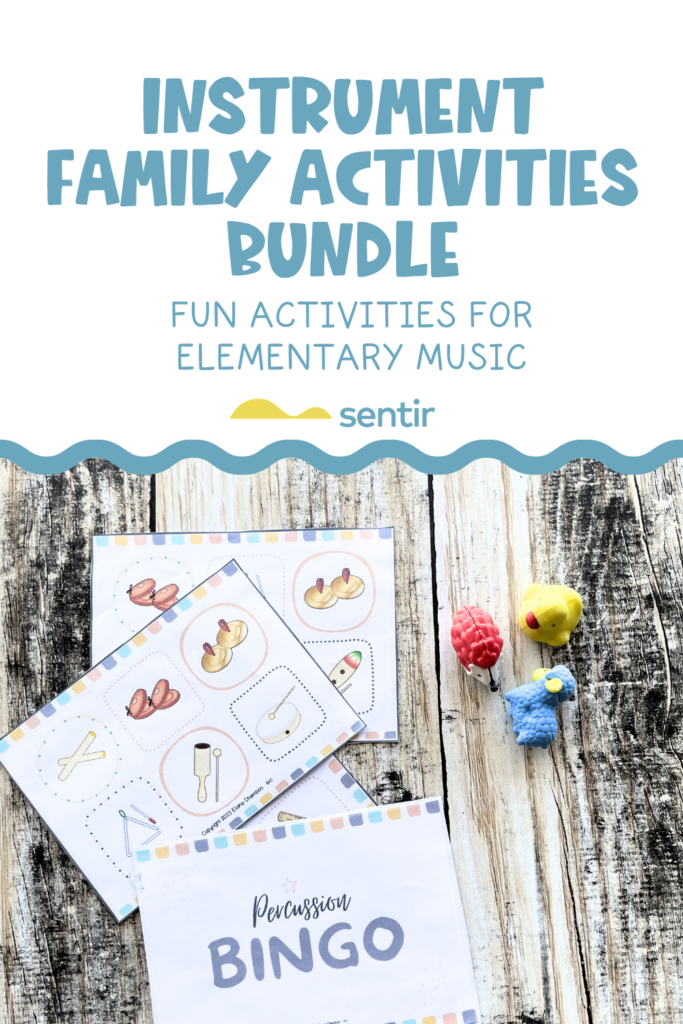
Looking for more ways to teach instrument families?
Explore a collection of worksheets, games, listening activities, bingo, sorting activities, and music centers designed to help students identify, classify, and recognize musical instruments with confidence.
🇺🇸 Explore the Musical Instruments MEGA Bundle
🇪🇸 Explora el MEGA Bundle de Instrumentos Musicales
FAQ: Teaching Instrument Families in Elementary Music
What are the main instrument families for elementary music?
The main instrument families usually taught in elementary music are strings, woodwinds, brass, and percussion. Younger students often begin by identifying instruments visually before moving into sound recognition and listening activities.
What is the best way to teach instrument families to elementary students?
A visual-first sequence works well: show the instruments, compare their shapes and playing techniques, classify them into families, use sorting games or music centers, and then move into listening activities. This helps students build stronger connections before they are asked to identify instruments by sound.
What activities help students review instrument families?
Instrument family sorting cards, treasure hunt games, bingo, memory games, worksheets, color-by-family activities, and listening games all help students practice instrument recognition in different ways. These activities work especially well for music centers, small groups, early finishers, and sub plans.
Final Thoughts
Teaching instrument families in elementary music is not really about memorization.
It’s about helping students build meaningful connections with instruments through:
- seeing,
- comparing,
- discussing,
- playing,
- classifying,
- and eventually listening.
When students first build a strong visual foundation, auditory recognition becomes dramatically easier.
That’s why I always teach instrument families in this order:
See first. Listen later.
And honestly?
It completely changed the way my students learn instruments.
If you’re looking for more elementary music instrument activities, instrument family games, listening activities, and printable music centers, you can explore the full collection linked throughout this post.
Happy teaching 🎵
Related Posts
Looking for more elementary music teaching ideas and hands-on activities?
🎸 Ukulele Games for Beginners: How to Teach Chords and Strumming Through Play
🎹 5 Fun Resources to Teach Piano Keys to Kids
🎼 How to Plan Your First Piano Lesson for Kids
👉 Explore more music teaching ideas on the Sentir Musical Resources Blog