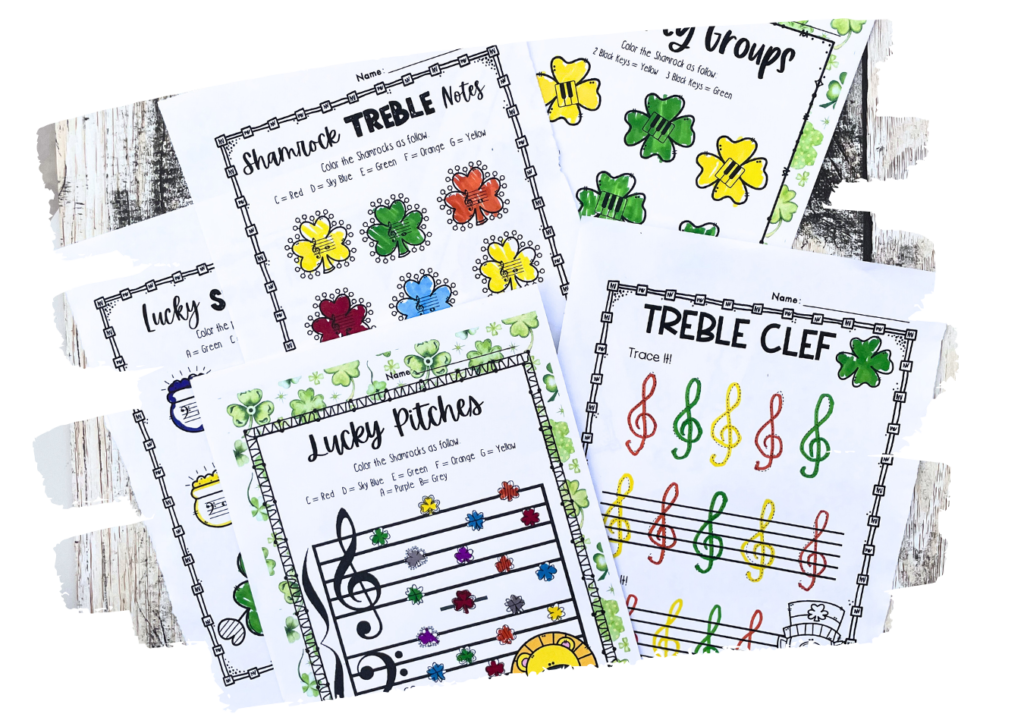
St. Patrick’s Day Music Activities are a perfect way to bring seasonal fun into your elementary music classroom while reinforcing rhythm, staff reading, and piano skills.
When I was a child taking piano lessons, music theory felt… heavy.
Worksheets. Pencils. No movement. No joy.
I remember thinking that if I ever became a music teacher, I would find a different way. Music has rhythm, movement, energy — so why should learning it feel flat?
That idea stayed with me.
Today, I design music resources for teachers who want theory to feel engaging, structured, and meaningful — not just another worksheet.
And seasonal activities (like St. Patrick’s Day) are one of my favorite tools to make that happen.
But not just because they’re “cute.”
Because they work.
Why Seasonal Themes Increase Motivation in March
By March, many elementary classrooms in the U.S. start feeling that mid-semester fatigue.
Students know the routine.
Teachers are deep into curriculum.
Energy fluctuates.
Seasonal themes break that pattern.
When students see shamrocks, rainbows, or pots of gold, their brains recognize something new and relevant to their environment — stores, decorations, conversations at home.
That emotional connection increases engagement.
And when engagement increases, learning accelerates.
But the key is this:
Seasonal activities must still follow a clear pedagogical sequence.
Fun without structure doesn’t create mastery.
How I Teach Rhythm: Sound First, Symbol Later
One of the biggest mistakes I see in early music education is starting with notation.
Children don’t learn language by reading first.
They speak. They listen. They move.
Music should work the same way.
When I introduce rhythm, I always begin with sound and movement.
We chant.
We move.
We echo patterns.
We experience rhythm in the body.
Only after students internalize the sound do I show the symbol.
“This is what you just performed.”
“This is what that sound looks like.”
That sequence creates understanding — not memorization.
Where Color-by-Rhythm Worksheets Fit
Worksheets are not the introduction.
They are reinforcement.
After students:
Experience the rhythm
Perform it
Compose simple patterns
Identify it aurally
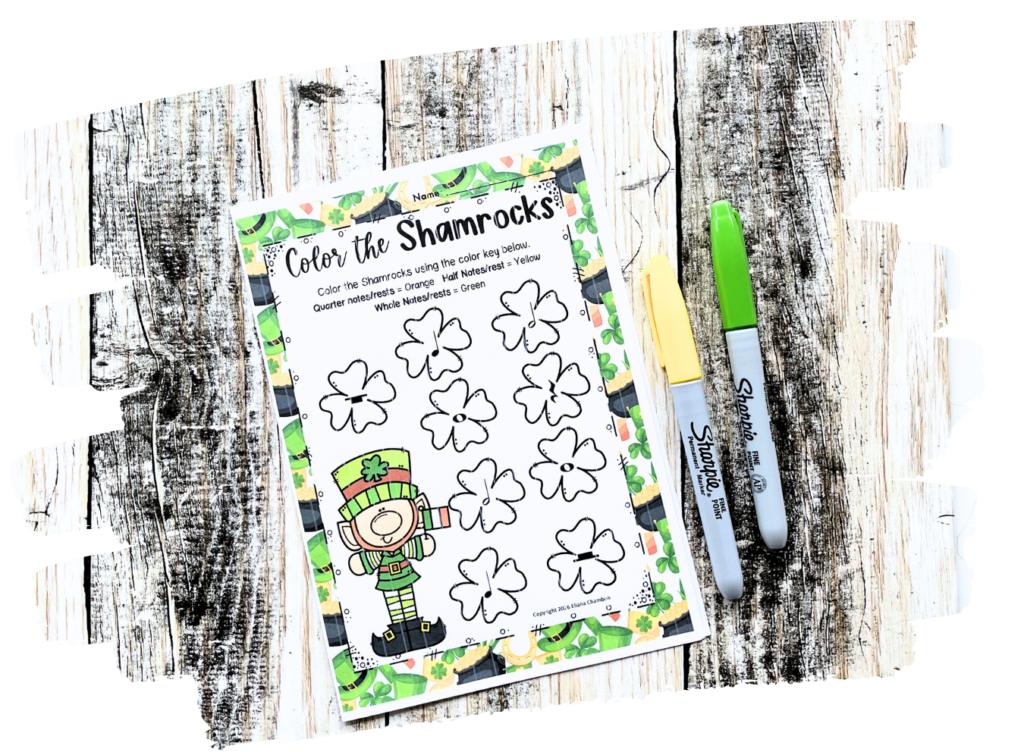
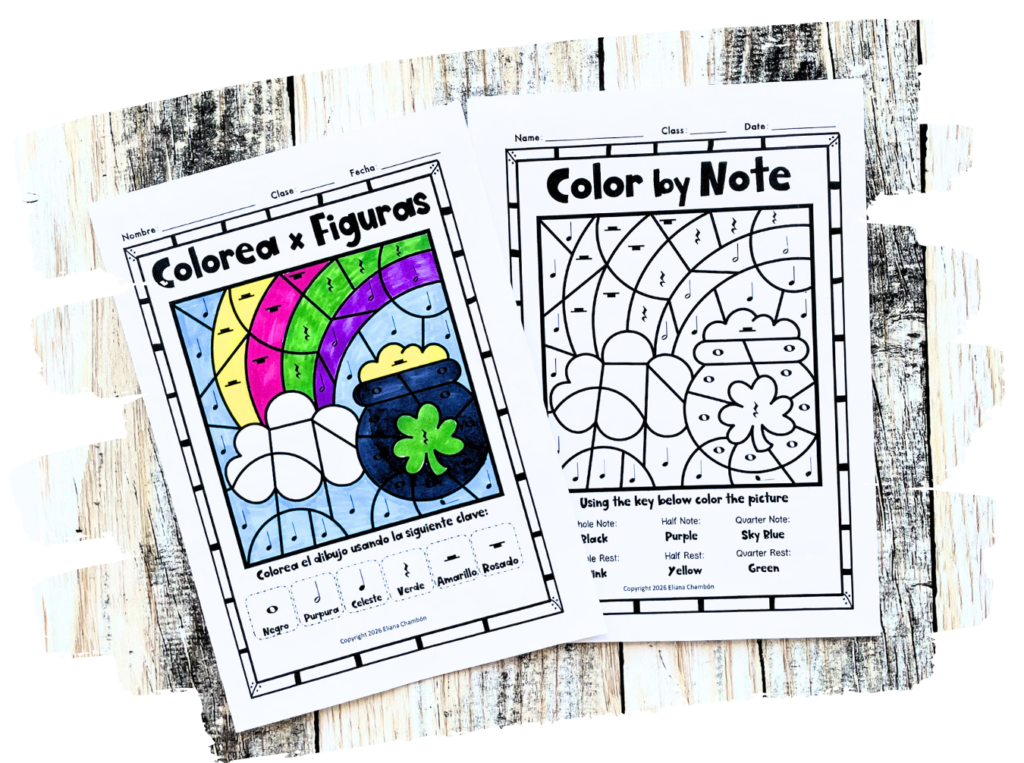
Then I use color-by-rhythm pages as:
- Visual discrimination practice
• Independent reinforcement
• Calm-focus work time
• Informal assessment
Coloring forces students to slow down and scan carefully:
“Is that a quarter note or two eighth notes?”
“Is that a quarter rest or something else?”
That visual scanning builds fluency.
In group settings, these activities are incredibly useful.
If I’m listening to one student perform individually, the others are actively reinforcing content — not waiting or distracting.
That’s powerful classroom management.
Teaching Piano: Why Spatial Awareness Comes First
In beginner piano, the biggest struggle is not memorizing letters.
It’s spatial orientation.
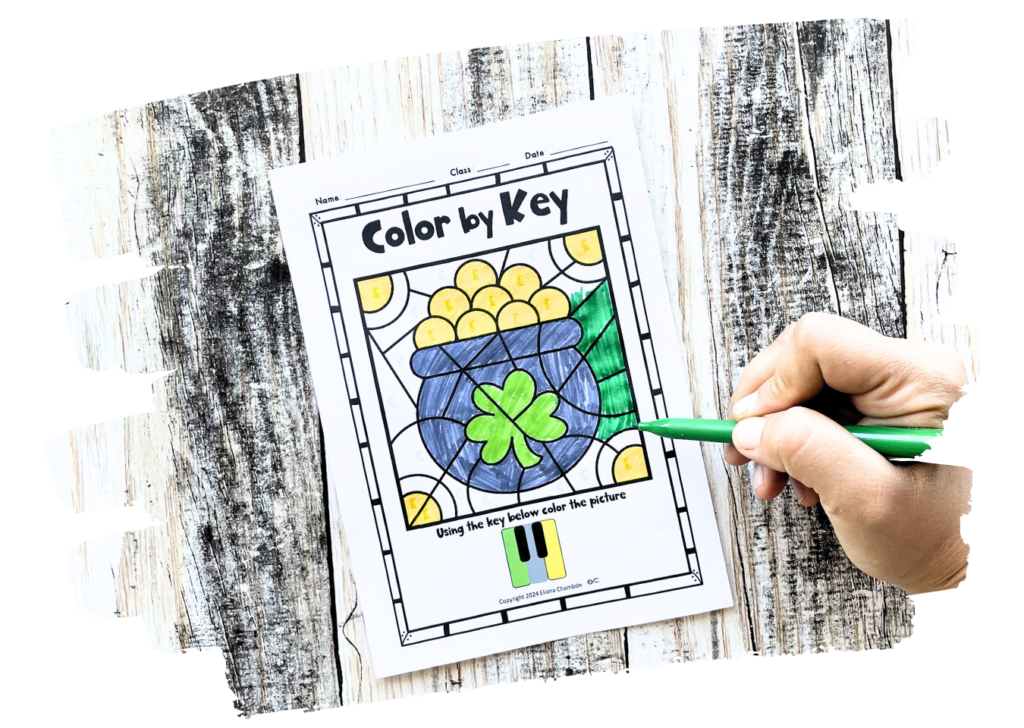
If students don’t deeply understand the groups of two and three black keys, everything else becomes confusing.
I always start with:
- Locating 2-black-key groups
- Locating 3-black-key groups
- Playing rhythmic patterns on those groups
- Moving confidently around the keyboard
Only after that do I introduce letter names like C–D–E.
And even then, we move from:
Sound → Pattern → Orientation → Letter → Reinforcement
Color-by-piano-key activities work beautifully in this stage.
They:
✔ Strengthen keyboard mapping
✔ Reinforce visual recognition
✔ Build automaticity
✔ Allow repetition without boredom
And repetition is essential.
The more students visually identify keys, the faster their hands respond at the piano.
How You Can Use These Activities Strategically
Here are practical ways teachers use them:
- Independent centers
- Small group differentiation
- Early finisher work
- Substitute plans
- Informal assessment
- Quiet focus time during individual performance checks
They’re not just coloring sheets.
They’re structured reinforcement tools.
And when designed progressively (beginner to advanced), they allow real differentiation.
Final Thoughts
Seasonal activities are powerful — but only when rooted in sound-first pedagogy and clear progression.
Fun should support structure.
Not replace it.
If you’re looking for ready-to-print St. Patrick’s Day music activities that follow this philosophy, you can explore the full collection here:
👉Click Here (English & Spanish)
Make learning joyful — but intentional.
Explore some of my music resources here and find ready-to-use materials for your music classroom.