

Spring music worksheets are a fun way to review rhythm, note reading, and piano skills in elementary music classes. Seasonal activities help students stay engaged while reinforcing important music theory concepts.
Spring often feels like a reset button in the music classroom.
It’s not just because of flowers or Easter decorations — it’s the shift in energy.
Students feel lighter. Classrooms feel brighter. This time of year becomes the perfect moment to refresh how students practice core music skills without changing the curriculum completely.
You don’t need to reinvent your curriculum this spring.
Instead, focus on three simple elements:
Fresh visuals.
Intentional structure.
Activities that respect how children actually learn music — sound first, symbol second.
If you’re looking for easy spring music activities for elementary students that reinforce rhythm, piano skills, and note reading — without adding extra prep to your week — this guide will give you practical ideas you can use immediately.
🌷 Why Spring Music Activities Actually Improve Learning
Seasonal activities aren’t just “cute.”
They’re strategic.
When students see familiar spring visuals — flowers, rainbows, Easter eggs — their brains recognize something current and relevant. That novelty increases engagement without changing the actual content.
You’re still teaching:
- Rhythm
- Note names
- Keyboard geography
- Clef reading
But repetition feels lighter.
And repetition is what builds fluency.
As a child, I remember sitting in piano lessons doing black-and-white theory pages that felt disconnected from sound. It was mechanical. Dry. Frustrating.
That experience shaped how I design resources today.
Music theory should feel connected to sound, movement, and joy — not just paper.
🎵 Spring Rhythm Activities
When I teach rhythm, I always start with sound before symbol.
Students move first. Chant first. Echo first.
Notation comes later.
That philosophy applies even during seasonal units.
1️⃣ Spring Echo Rhythms
Use body percussion and call it:
- Rain patterns
- Bunny hops
- Bird songs
Clap or tap a short pattern. Students echo.
Increase difficulty gradually:
- Add rests
- Change tempo
- Move from quarter notes to eighth notes
- Introduce sixteenth-note groupings
This keeps rhythm embodied before it becomes visual.
2️⃣ Spring Rhythm Composition
Give students a limited rhythm bank and ask them to compose:
- A 4-beat “spring rain” pattern
- An 8-beat “Easter egg hunt” rhythm
- A “flower growing” slow pattern
Perform first.
Then show notation.
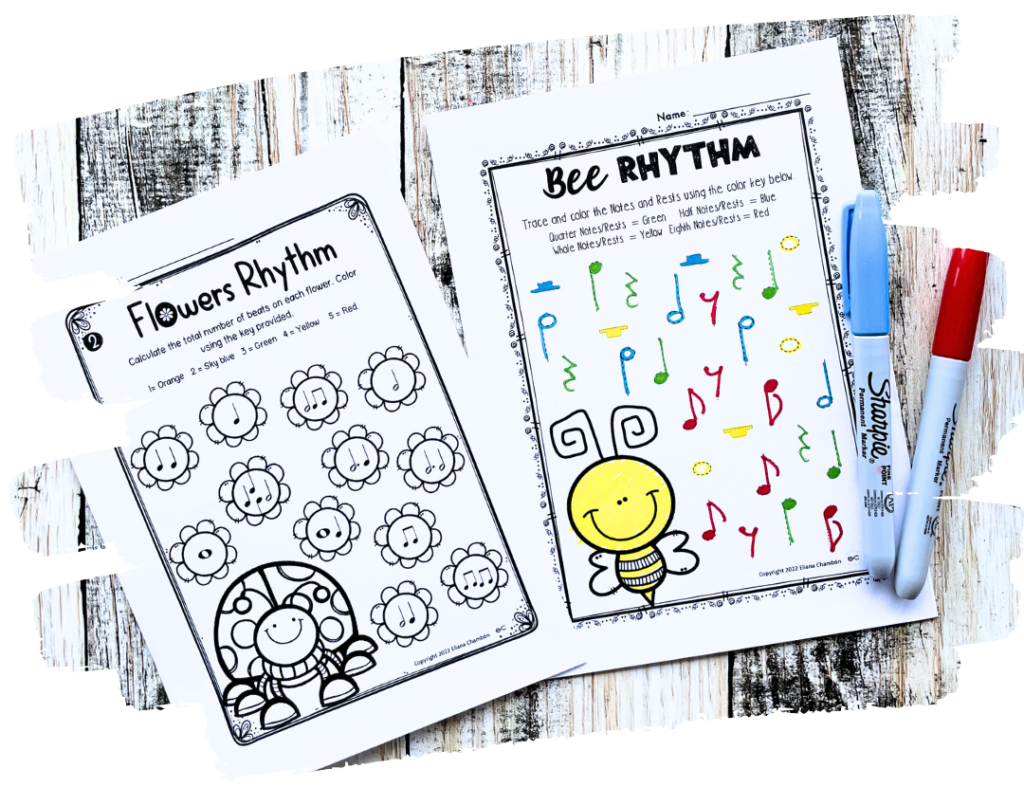
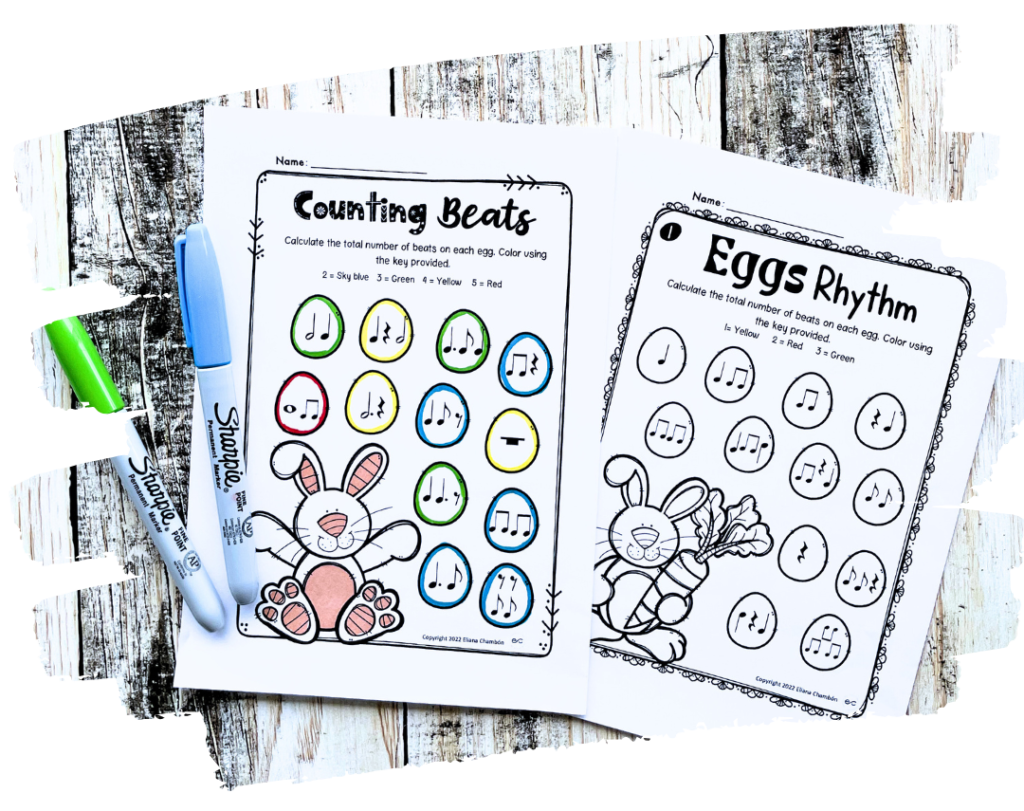
3️⃣ Spring Rhythm Worksheets (Reinforcement Phase)
After sound work, worksheets become powerful.
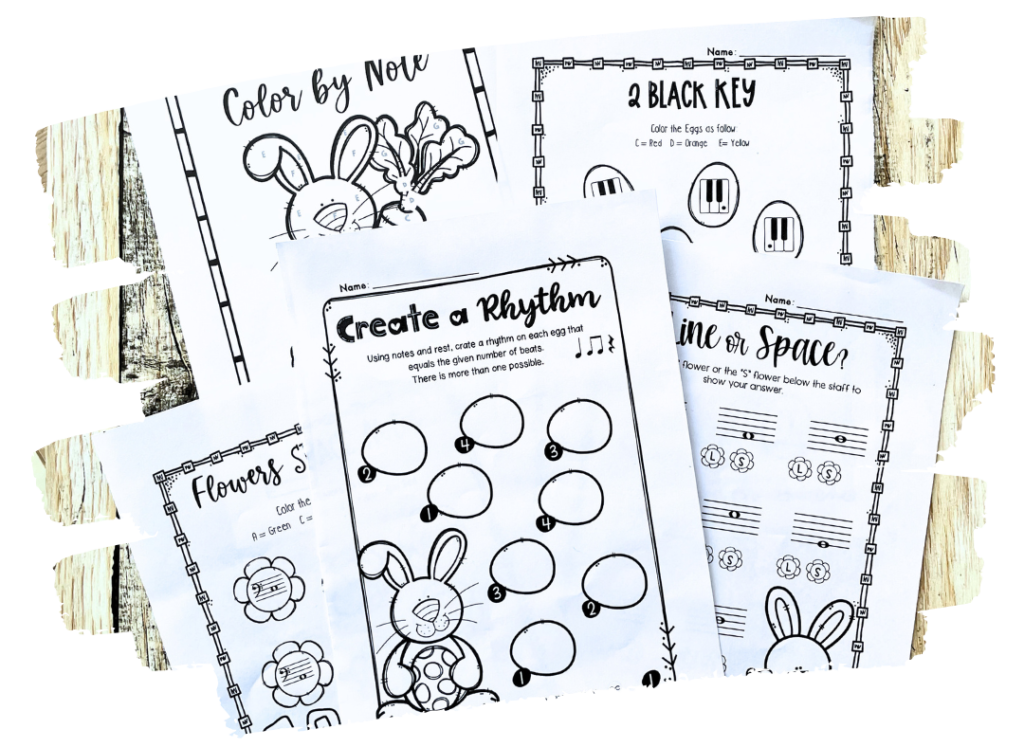
I use seasonal spring rhythm worksheets to reinforce:
- Note values
- Time signatures
- Identifying and writing rhythms
- Musical math
They work beautifully for:
- Music centers
- Early finishers
- Review weeks
- Informal assessment
- Sub plans
👉 My Spring & Easter Rhythm Worksheets (Grades 3–6) are designed exactly for this reinforcement stage. (Link in English – Link in Spanish)
They don’t replace movement.
They strengthen it.
🎹 Spring Piano & Keyboard Activities
For beginner piano students, spring is a perfect time to review keyboard geography.
The biggest issue I see with young beginners is rushing to note names before students truly understand spatial orientation.
Here’s the progression I always use:
Step 1: Groups of 2 and 3 Black Keys
Landmarks first.
Without black key groups, white keys look identical.
Step 2: C–D–E
Use the 2 black keys as reference.
Step 3: F–G–A–B
Use the 3 black keys as reference.
Step 4: Full Keyboard Navigation
Only after orientation is solid do I expand further.
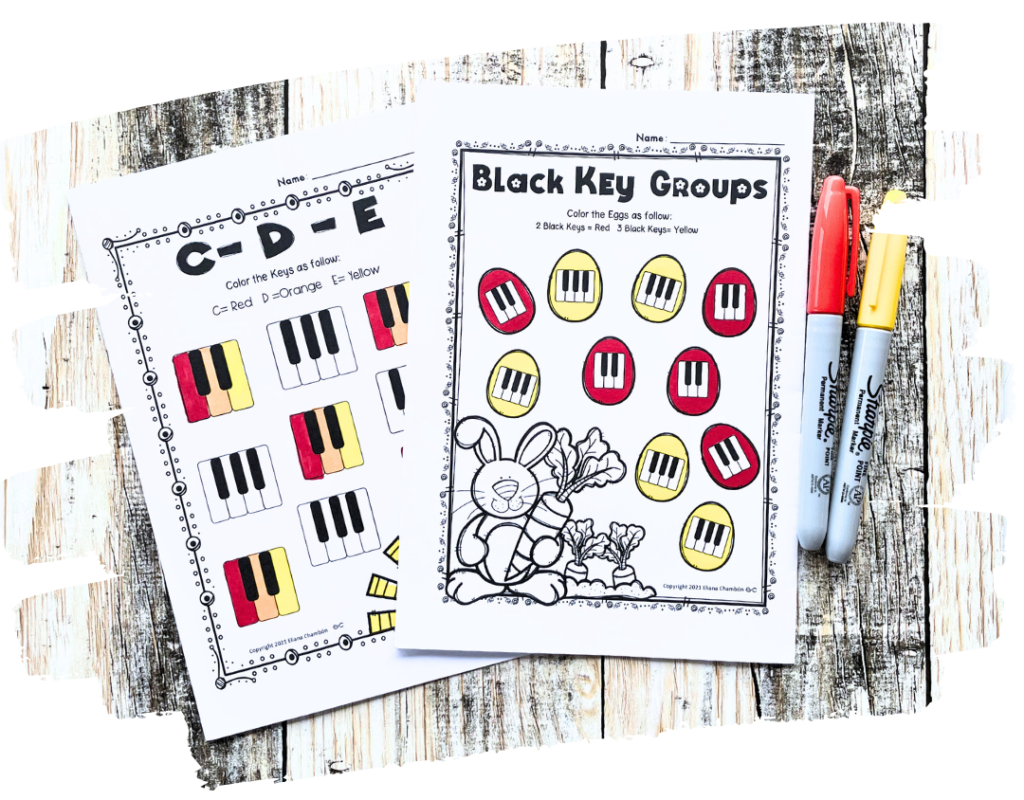
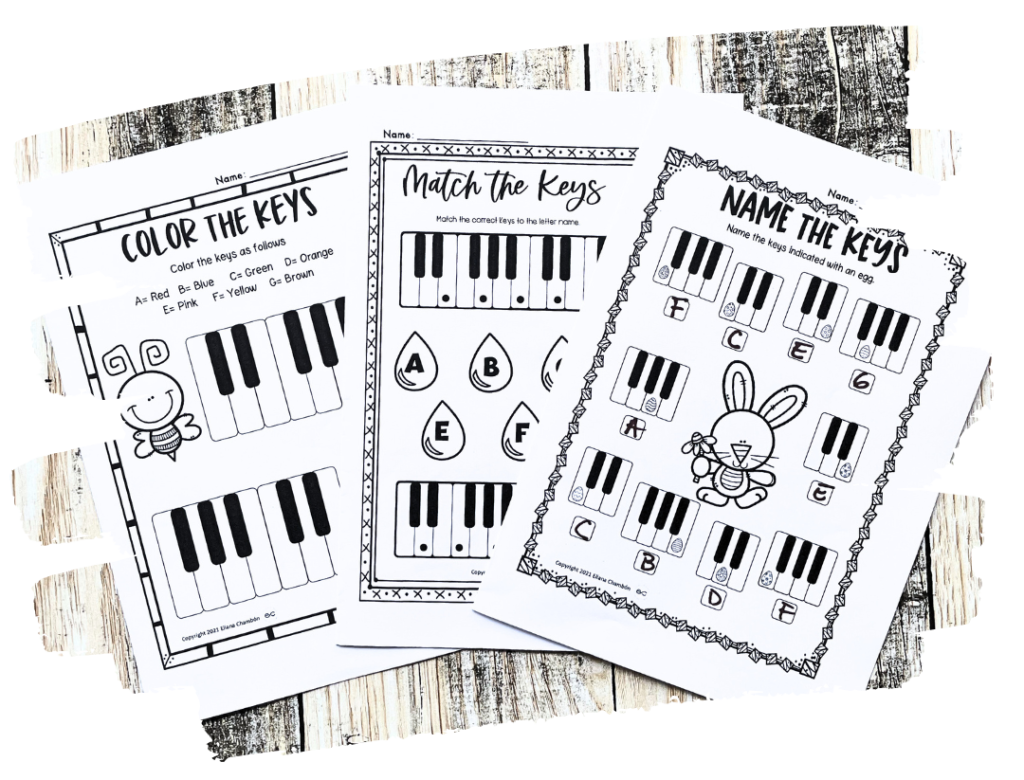
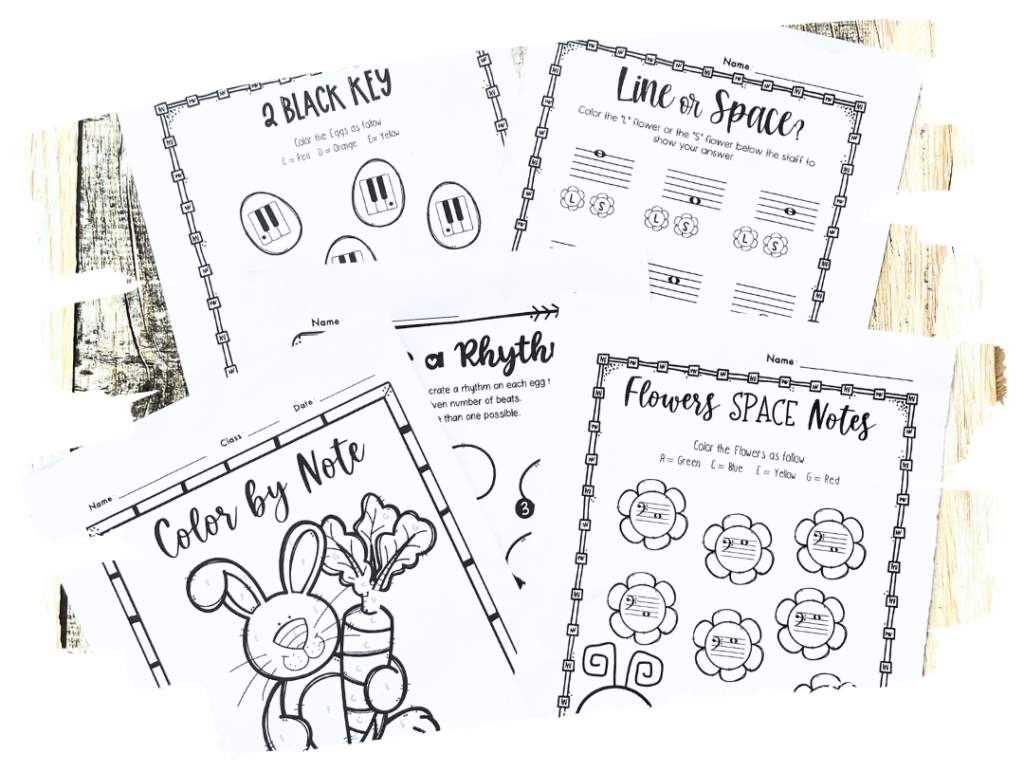
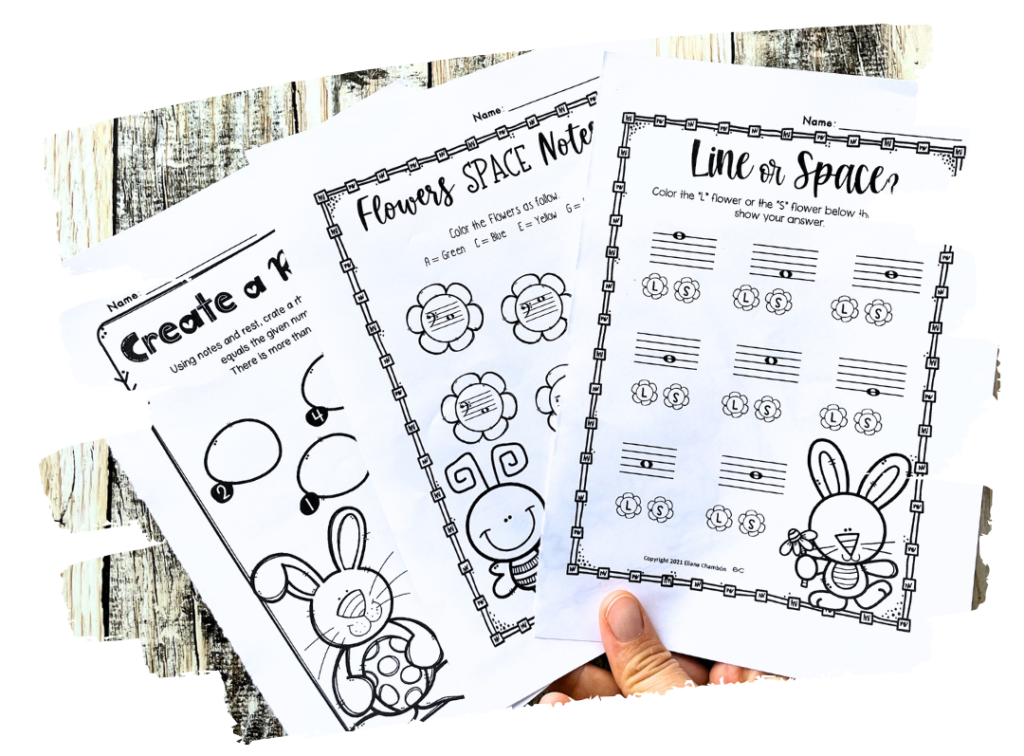
After hands-on playing, I use spring piano worksheets to reinforce:
- Coloring specific keys
- Matching letter names
- Identifying black key groups
- Writing note names
These are especially helpful when teaching small groups. While I listen to one student individually, the others stay engaged in meaningful review — not busy work.
👉 My Spring Easter Piano Keyboard Worksheets follow this exact structure and are designed for ages 4–8.
🎼 Spring Note Reading Activities
Spring is also ideal for reviewing:
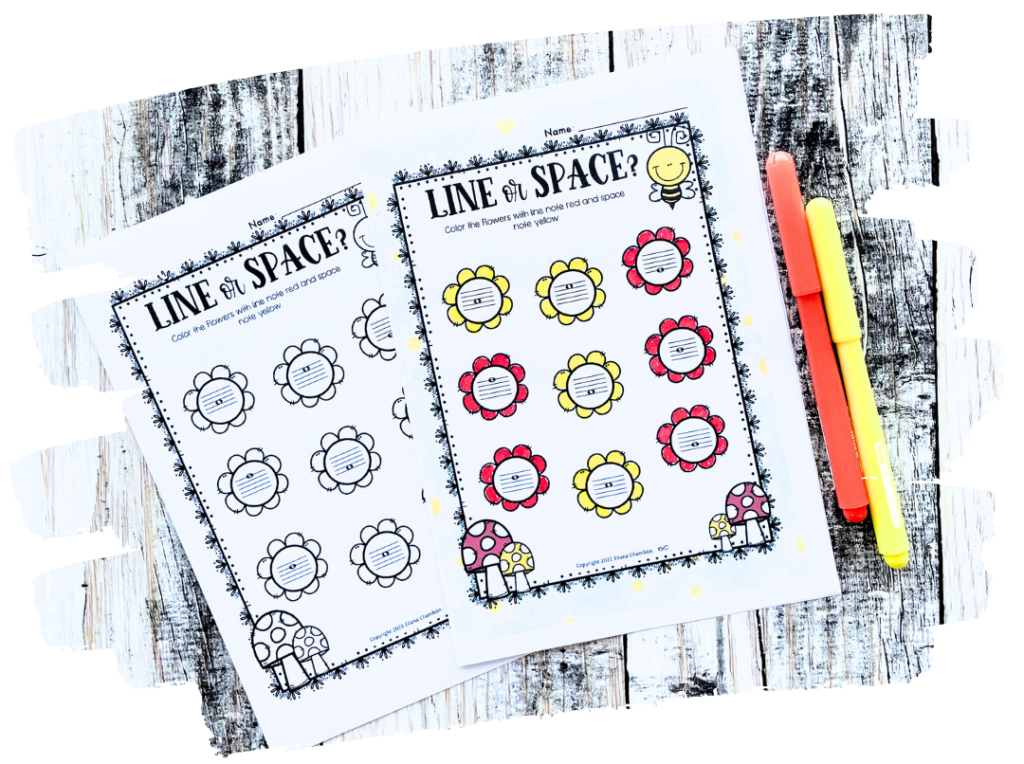
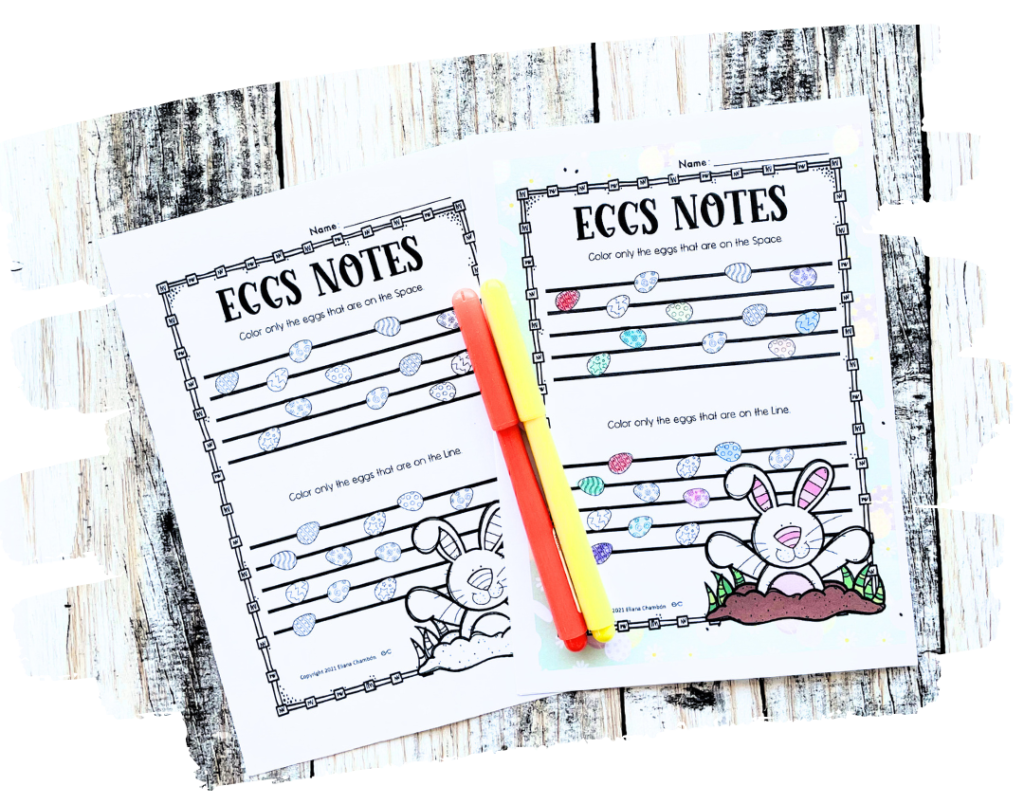
- Line and space notes
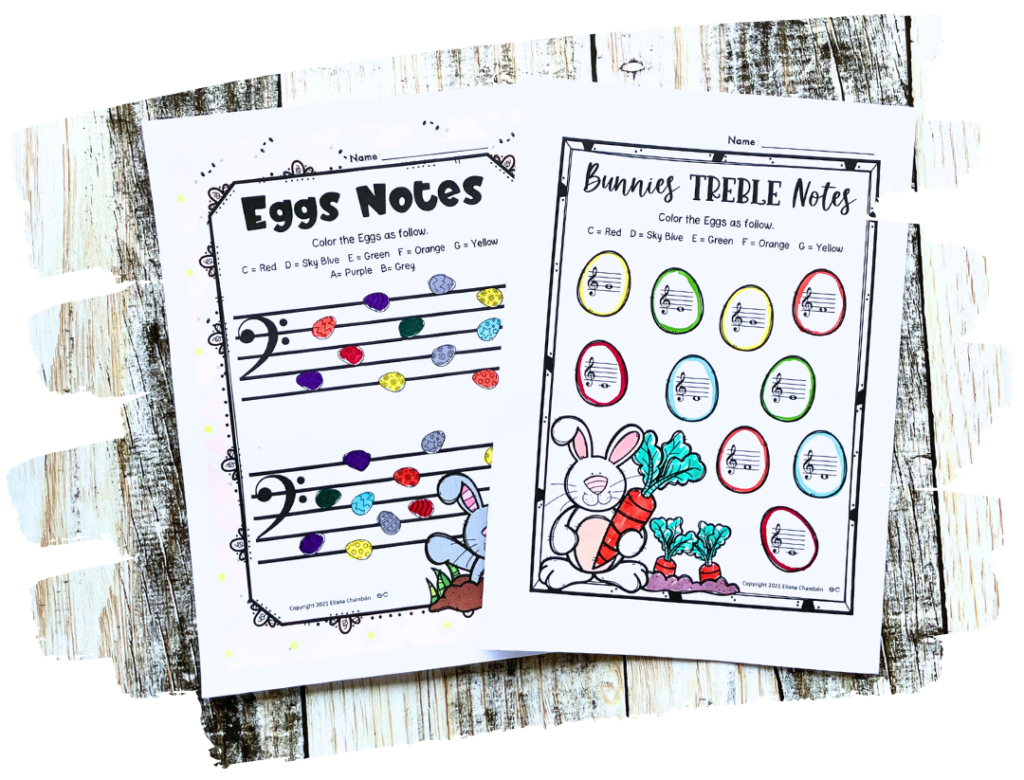
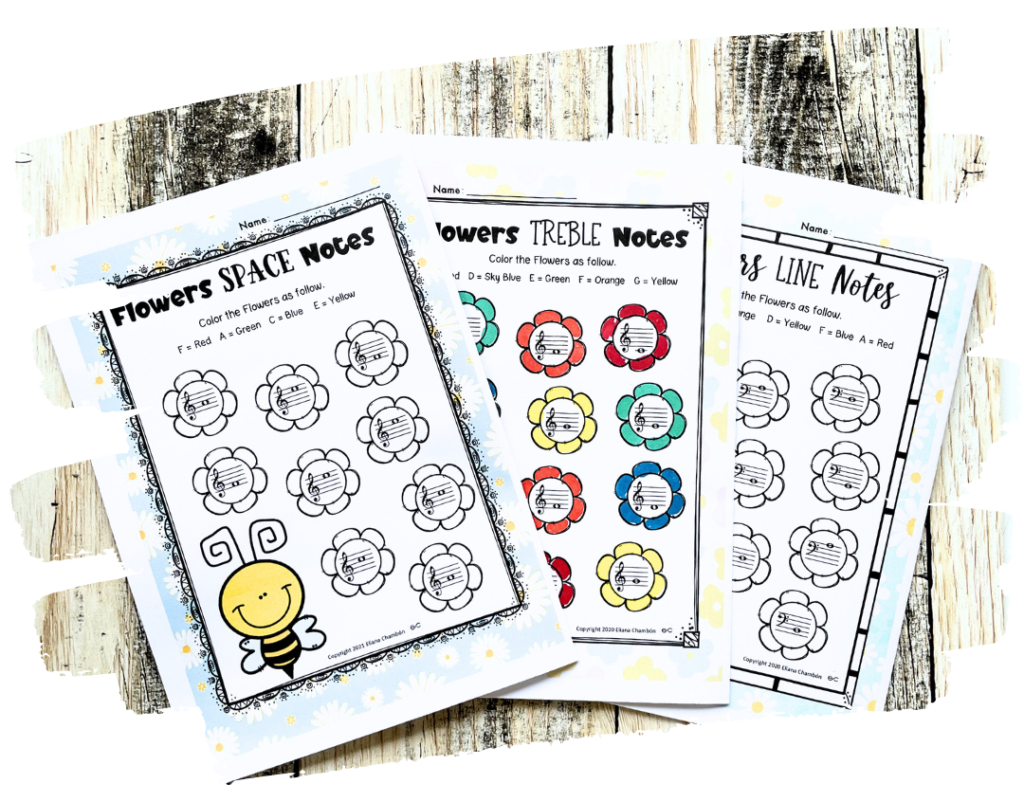
- Treble clef and bass clef note naming
- Visual discrimination on the staff
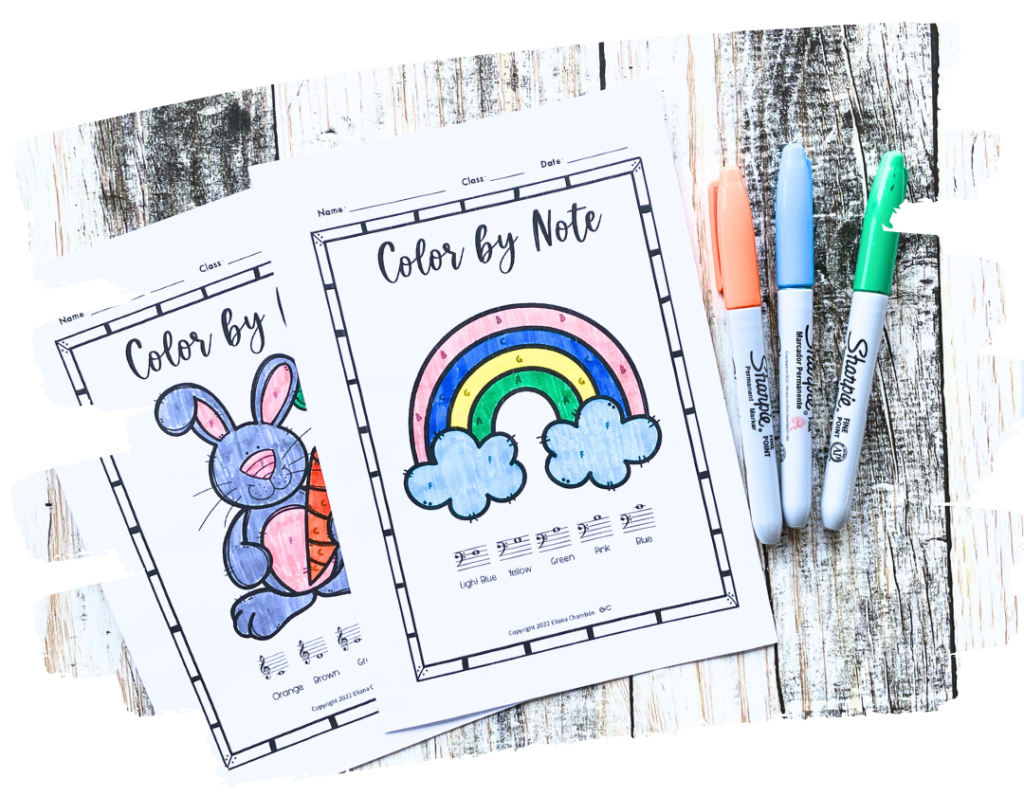
Line & Space Color Coding
Have students color:
- Line notes one color
- Space notes another
This reinforces the alternating structure of the staff — something many students struggle with.
Treble & Bass Clef Practice
Matching, writing, identifying — all in seasonal formats that maintain attention.
Repetition is essential in note reading.
Visual variety prevents fatigue.
👉 My Spring Line & Space Worksheets (Link in English – Link in Spanish) and Spring Note Naming Worksheets (Treble & Bass Clef) (Link in English – Link in Spanish) are structured for gradual reinforcement.
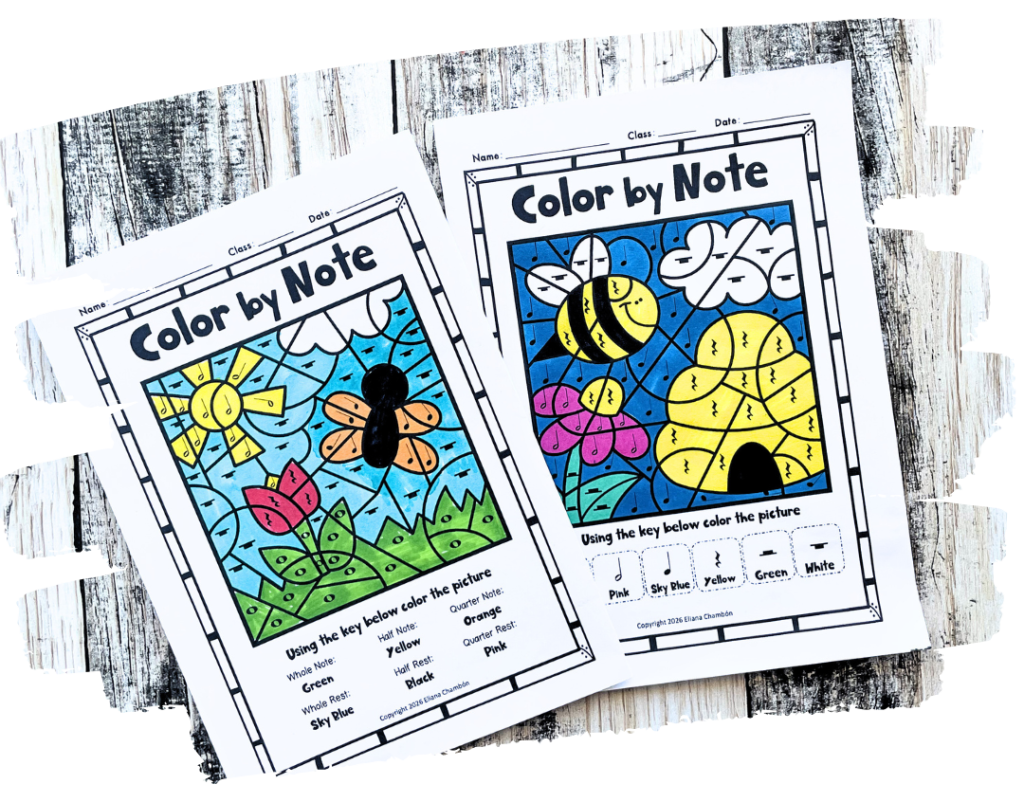
🎨 Spring Music Coloring Activities (Yes, They’re Pedagogical)
Coloring is not filler — if designed intentionally.
When students complete color-by-note or color-by-rhythm activities, they must:
- Identify the symbol
- Recall the name/value
- Apply the correct color
That’s active processing.
Coloring also:
- Builds visual discrimination
- Encourages focus
- Creates calm classroom moments
- Allows natural differentiation
👉 My Spring Music Coloring Sheets combine rhythm and note identification for multi-skill reinforcement.
(Link in English – Link in Spanish)
🌼 Low-Prep Spring Music Ideas for Busy Weeks
Spring is often:
- Testing season
- Concert prep season
- End-of-year review season
You need flexibility.
Here are simple structures that work:
✔ Spring Music Centers
Rotate students through:
- Rhythm worksheet station
- Piano worksheet station
- Coloring station
- Flashcard review station
✔ Sub Plans
Seasonal worksheets are ideal because:
- They reinforce core skills
- They don’t require instruments
- They’re structured and clear
- They include answer keys
✔ Review Weeks
Use seasonal materials to revisit previously taught skills without it feeling repetitive.
🌸 Why I Design Seasonal Music Worksheets
My goal isn’t to replace core curriculum.
It’s to support it.
I design resources that are:
- Visually engaging
- Structurally progressive
- Easy to implement
- Adaptable to different teaching styles
Whether you teach general elementary music, piano lessons, or small group classes, seasonal formats give you:
Energy without chaos.
Structure without boredom.
🎁 Try It First
If you want to see how seasonal reinforcement works in your classroom, I offer a Free Spring Music Theory Sample Pack that includes:
- Piano worksheet samples
- Rhythm activities
- Note reading practice
It’s a simple way to test engagement before committing to full sets.
(Link in English – Link in Spanish)
📦 Want the Complete Spring Music Bundle?
If you teach multiple concepts, the Spring Easter Music Theory Bundle combines:
- Piano worksheets
- Note naming
- Rhythm practice
- Coloring sheets
All designed to reinforce core skills in a seasonal format.
(Link in English – Link in Spanish)
🌷 Final Thought
You don’t need to reinvent your curriculum this spring.
You just need:
Fresh visuals.
Intentional structure.
And activities that respect how children actually learn music — sound first, symbol second.
Spring is the perfect time to refresh rhythm, piano, and note reading skills — without adding more stress to your week.
🎵 Looking for more ideas? Check out my Music Teaching Blog for creative lesson activities.