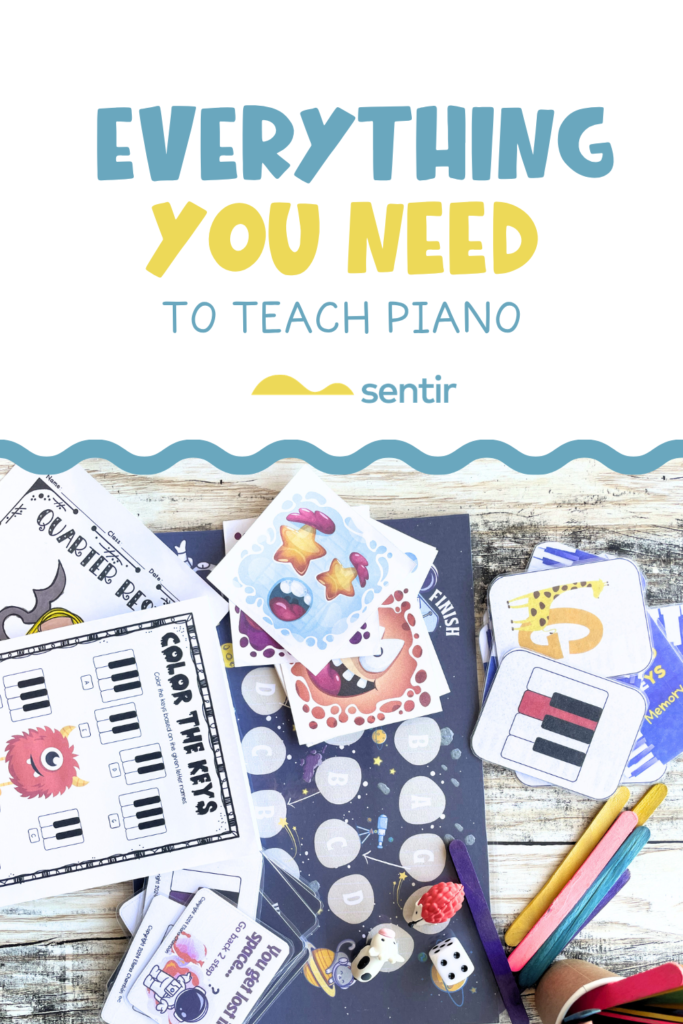
Teaching a child’s first piano lesson can feel exciting—but also a little overwhelming. As teachers, we want our students to leave feeling successful, confident, and excited to come back for the next lesson.
I believe the first piano lesson is about much more than learning notes. It is about helping children feel comfortable at the keyboard, explore the instrument through play, and discover that making music is fun.
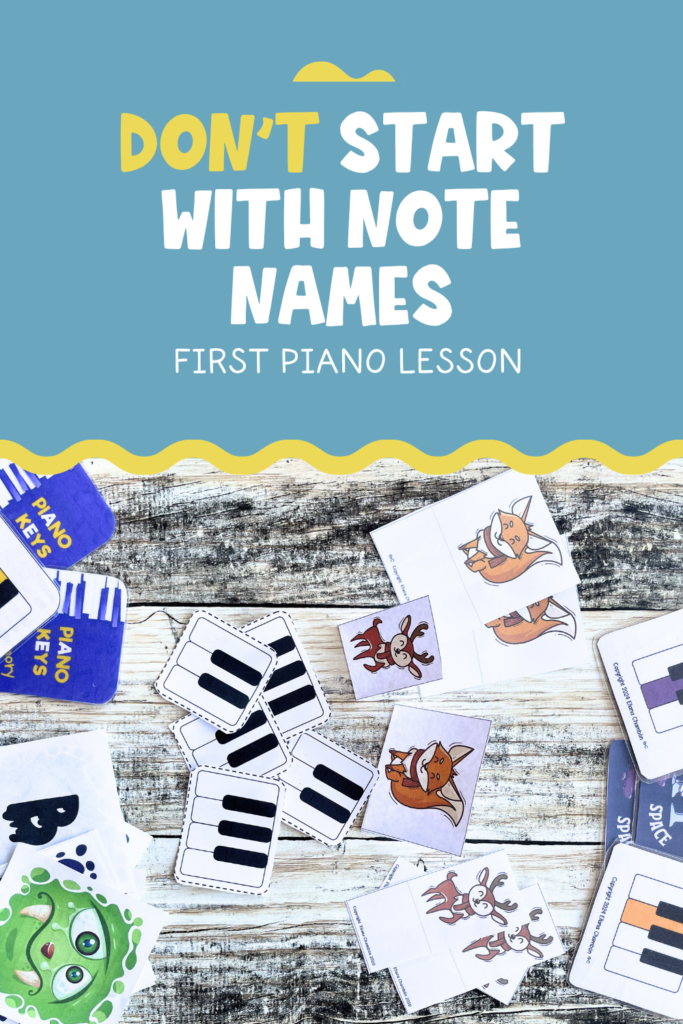
That is why I don’t begin with note names or reading music.
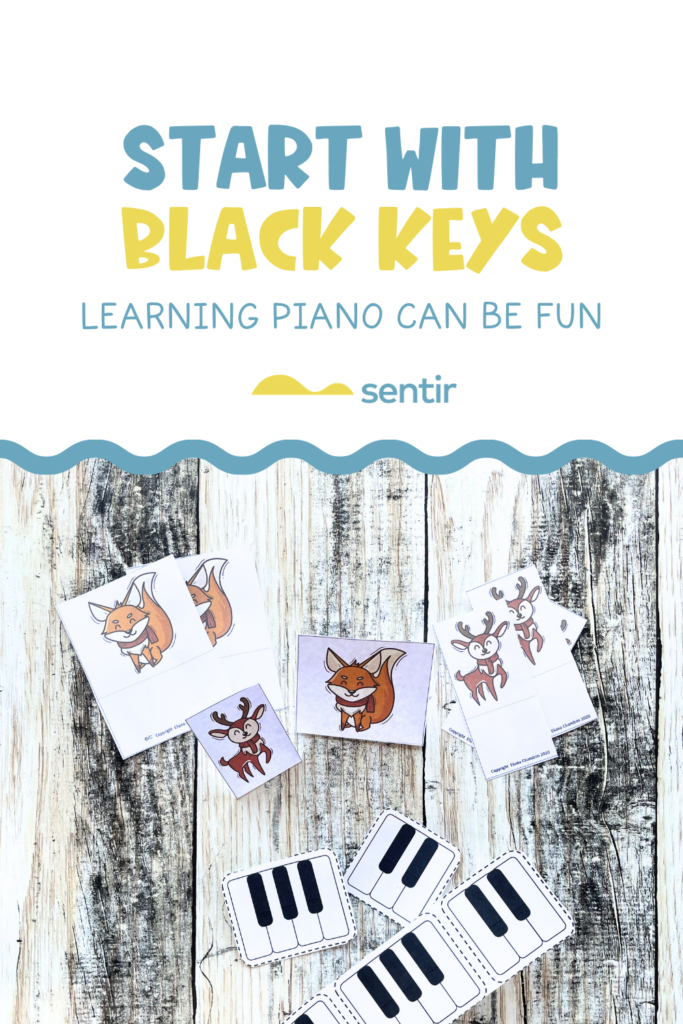
Instead, I focus on helping students recognize the groups of two and three black keys. This simple activity gives children an easy way to navigate the keyboard and creates a strong foundation for everything they will learn later.
Over the years, I have found that when students leave their very first lesson smiling, feeling confident, and able to find their way around the keyboard, they are much more motivated to continue learning.
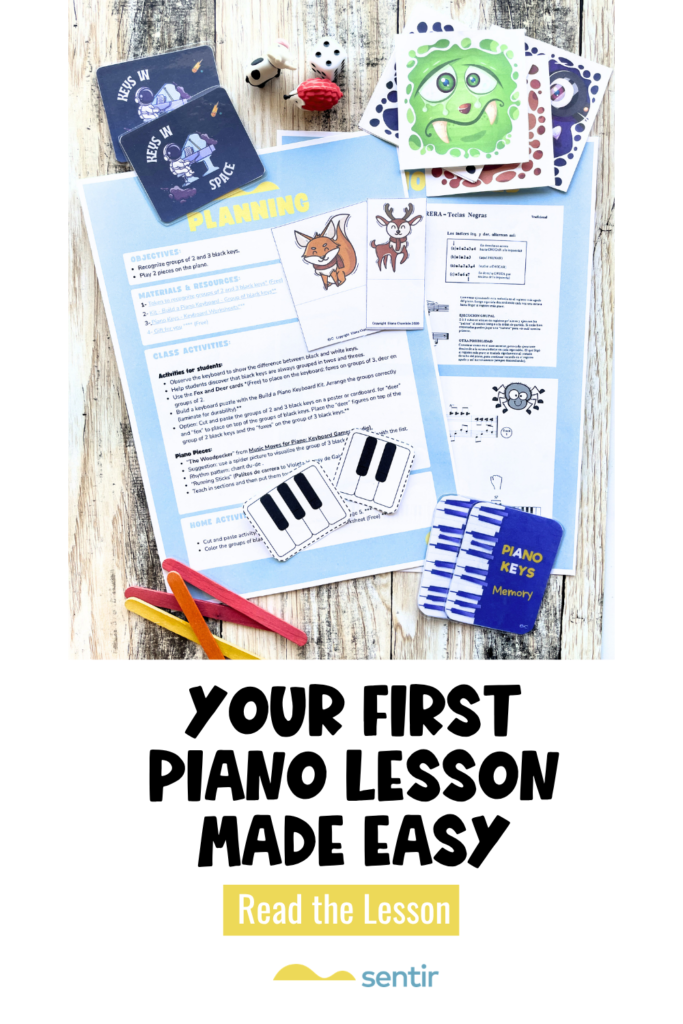
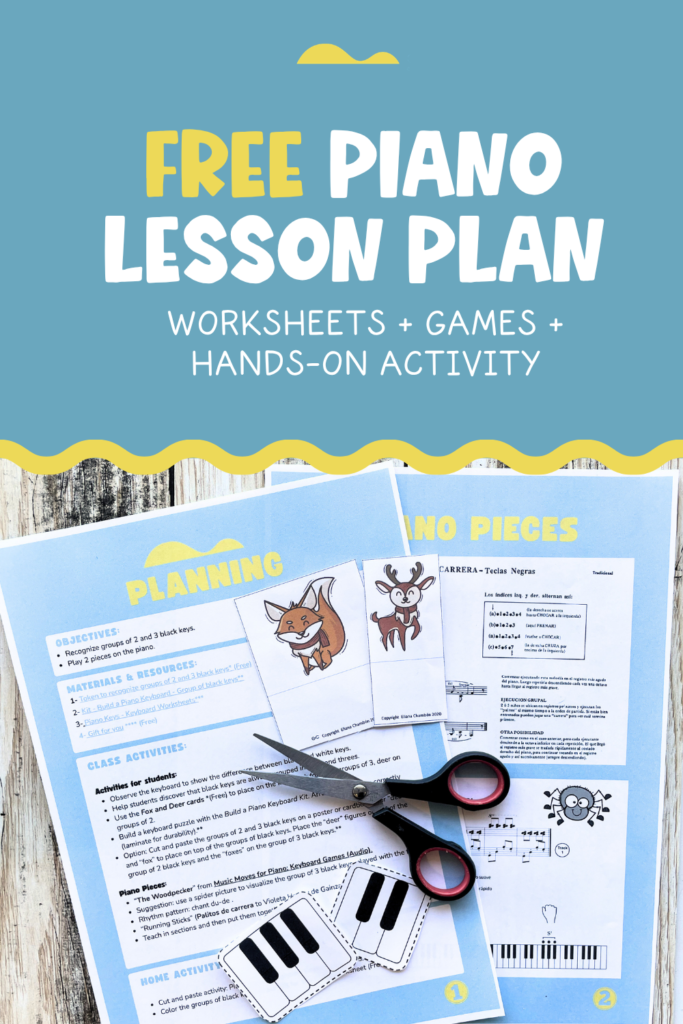
To make planning easier, I created a free printable First Piano Lesson Plan that includes the sequence of activities I use in my own lessons.
 “Save this idea for later
Download the Free First Piano Lesson Plan
Why the First Piano Lesson Matters
The first lesson sets the tone for everything that comes after.
Children don’t usually remember every detail you teach during that first class. What they remember is how they felt.
If they leave frustrated because they couldn’t remember note names, they may begin to think piano is difficult.
If they leave smiling because they explored the keyboard, played their first pieces, and successfully completed fun activities, they begin building confidence from the very beginning.
That confidence becomes the foundation for future learning.
This is why I always prioritize exploration, movement, games, and musical discovery before formal music reading.
Young beginners learn best when they can move, touch, build, play, and experiment. The more active the lesson feels, the more meaningful the learning becomes.
Instead of trying to teach everything during the first lesson, I prefer to focus on one clear objective: helping students become familiar with the keyboard while enjoying the experience.
That simple goal often creates much better long-term results than trying to introduce too many concepts at once.
“Save this idea for later
What Should Kids Learn in Their First Piano Lesson?
When I teach a child’s first piano lesson, my goal isn’t to have students memorize note names or start reading music right away.
Instead, I want them to feel comfortable at the piano.
If they leave the lesson knowing how to find the groups of two and three black keys, feeling confident exploring the keyboard, and playing their very first pieces, I consider that lesson a success.
Everything else can come gradually in future lessons.
For the first lesson, I focus on four simple goals:
- Feel comfortable exploring the keyboard.
- Recognize the groups of two and three black keys.
- Develop coordination through movement and hands-on activities.
- Leave the lesson feeling excited about learning piano.
These small achievements help students build confidence and make them eager to come back for the next lesson.
How I Teach My First Piano Lesson
This is the lesson sequence I use with most of my beginner piano students.
It works well for both private lessons and small groups.
1. Explore the Keyboard
The first thing we do is simply explore the piano together.
We talk about the difference between the white keys and the black keys, and I encourage students to look for patterns instead of giving them answers right away.
Very quickly, they discover that the black keys are always grouped in twos and threes.
That simple discovery becomes the foundation for the rest of the lesson.
Instead of memorizing information, students begin by observing, exploring, and making their own discoveries.
2. Learn Through Games
Once students recognize the groups of two and three black keys, it’s time to play.
I use my free deer and fox tokens to mark the different groups across the keyboard.
Children love moving the tokens while searching for the correct place to put them.
We also build a printable keyboard puzzle on the table or even on the floor.
These hands-on activities transform a simple concept into an engaging learning experience.
Without even realizing it, students begin to recognize the keyboard layout naturally through play.
“Save this idea for later
3. Play Their First Piano Pieces
Once students feel comfortable finding their way around the keyboard, we are ready to make music.
One of my favorite beginner pieces is Running Sticks because it can be learned in small sections, allowing students to experience success very quickly.
I also enjoy using The Woodpecker from the Music Moves for Piano method. Students play with a relaxed fist on the group of three black keys while developing coordination, steady beat, and relaxed movement.
These first musical experiences help children realize that playing the piano is something they can do successfully from the very first lesson.
4. A Simple Take-Home Activity
Before the lesson ends, I like to send students home with one simple activity.
They color, cut out, and glue the black-key tokens onto a printable keyboard.
It isn’t meant to be homework that feels overwhelming.
Instead, it’s a fun opportunity to revisit the keyboard at home and reinforce what they learned in class.
Many parents later tell me that their children excitedly showed them the groups of two and three black keys on the family piano or keyboard.
For me, that’s a wonderful sign that the first lesson accomplished exactly what it was meant to do.
Download the Free First Piano Lesson Resources
If you’d like to use this same lesson sequence with your own students, I’ve created a free printable lesson plan that includes everything you need to get started.
Inside you’ll find:
- A complete first piano lesson plan.
- Printable deer and fox keyboard tokens.
- A keyboard puzzle activity.
- A take-home reinforcement activity.
- Teaching tips for adapting the lesson to different ages.
 Download the Free First Piano Lesson PDF
 Descarga Gratis el Plan de la Primera Clase de Piano
Why I Start with the Black Keys Instead of Note Names
One question I often hear is:
“Why don’t you teach the note names during the first lesson?”
The answer is simple: I don’t want children to feel overwhelmed.
Many beginner methods introduce note names immediately. While there’s nothing wrong with that approach, I’ve found that young children often learn more successfully when they first become familiar with the keyboard itself.
The groups of two and three black keys are easy to recognize, easy to remember, and give students clear landmarks they can use every time they sit at the piano.
Instead of worrying about remembering where Middle C is, students learn how to navigate the entire keyboard with confidence.
Once they feel comfortable finding their way around the piano, introducing note names becomes much easier.
I like to think of it this way:
First, students learn the “map.”
Later, they learn the “street names.”
This approach helps children experience success right from the beginning and reduces the frustration that sometimes comes with trying to remember too much information during the first lesson.
“Save this idea for later
Ready to Teach Your First Piano Lesson with Confidence?
Planning a first piano lesson doesn’t have to be stressful.
I’ve already organized the lesson sequence, printable activities, and visual resources that I use with my own beginner students, so you can spend less time planning and more time enjoying your lesson.
Whether you’re teaching private piano lessons, small groups, or elementary music classes, this free lesson plan is designed to help children feel successful from the very first day.
Download the Free First Piano Lesson PDF
Descarga Gratis el Plan de la Primera Clase de Piano
What Comes After the First Piano Lesson?
Once students can confidently recognize the groups of two and three black keys, they’re ready for the next step.
At this stage, I begin introducing games and hands-on activities that continue building keyboard recognition before moving into note reading.
One of my favorite follow-up resources is 5 Fun Piano Keys Activities for Beginners, where I share some of the printable games and classroom activities I use to reinforce keyboard geography while keeping students motivated.
These activities help students continue developing confidence at the keyboard through movement, visual learning, and play before introducing more advanced concepts.
Read: 5 Fun Piano Keys Activities for Beginners
More Beginner Piano Resources Coming Soon
I’m currently creating more beginner piano teaching resources, including:
- Piano Note Reading Activities
- Easy Piano Games for Kids
- Fun Music Theory Games for Beginners
- Music Worksheets for Elementary Students
Be sure to check back soon for new ideas and printable resources.
Want More Ready-to-Use Beginner Piano Activities?
If you’re looking for more than a single lesson, my Complete Beginner Piano Bundle brings together printable games, worksheets, keyboard activities, and hands-on resources designed to support students throughout their first months of piano study.
Whether you teach private piano lessons, group classes, or elementary music, the bundle helps you spend less time planning and more time making music with your students.
Explore the Complete Beginner Piano Bundle
Explora el Paquete de Piano para Principiantes
“Save this idea for later